
AI Productivity Trap: Recruitment Briefing
An industry that's translated high AI adoption into true impact. Original research commissioned by Fyxer.
Fyxer Research Team • July 2026
Executive Summary
Recruitment leads the way on AI
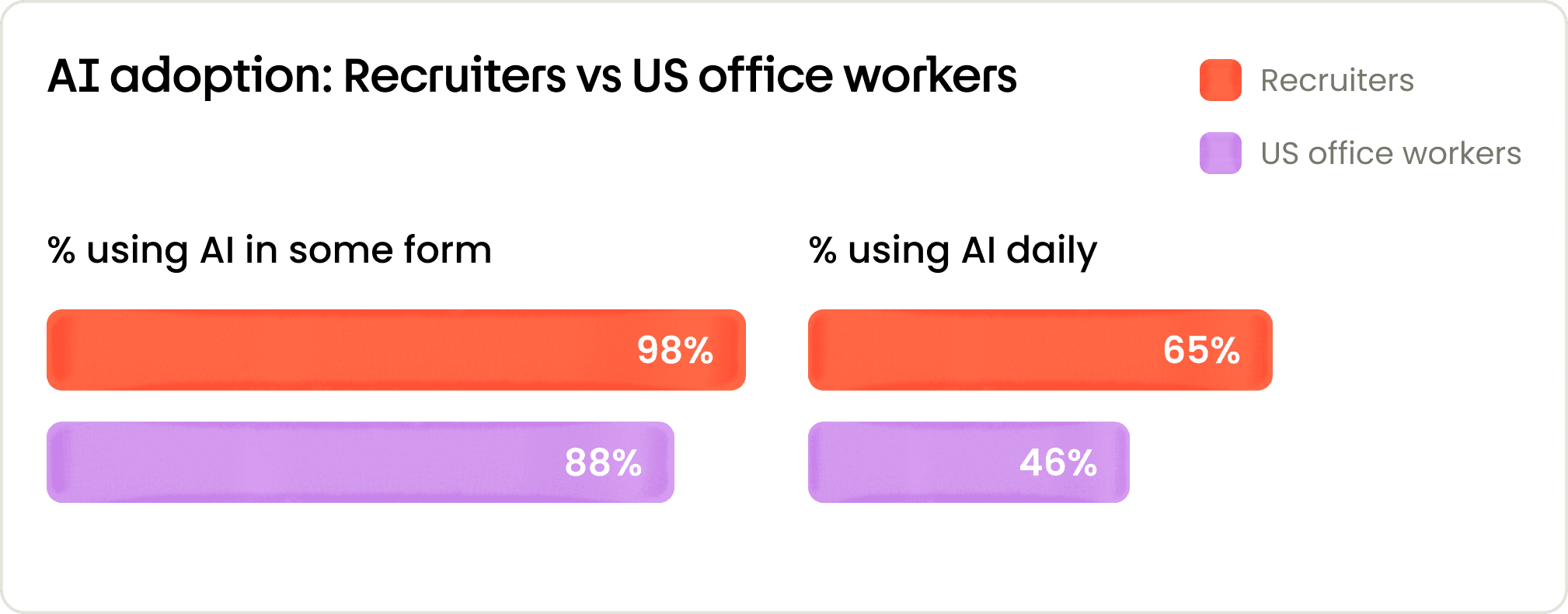
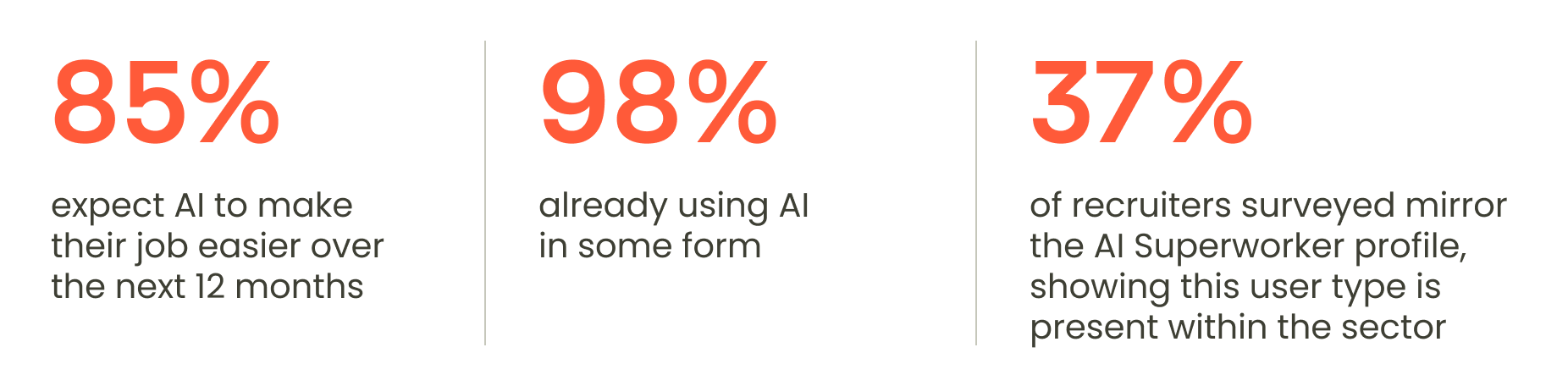
Recruitment has become one of the frontline industries for AI adoption. 98% of recruiters surveyed reported that they’ve used AI in some form, with 65% saying they use AI daily—the highest daily adoption rate of any industry analyzed in our 2026 AI Productivity Trap Report.
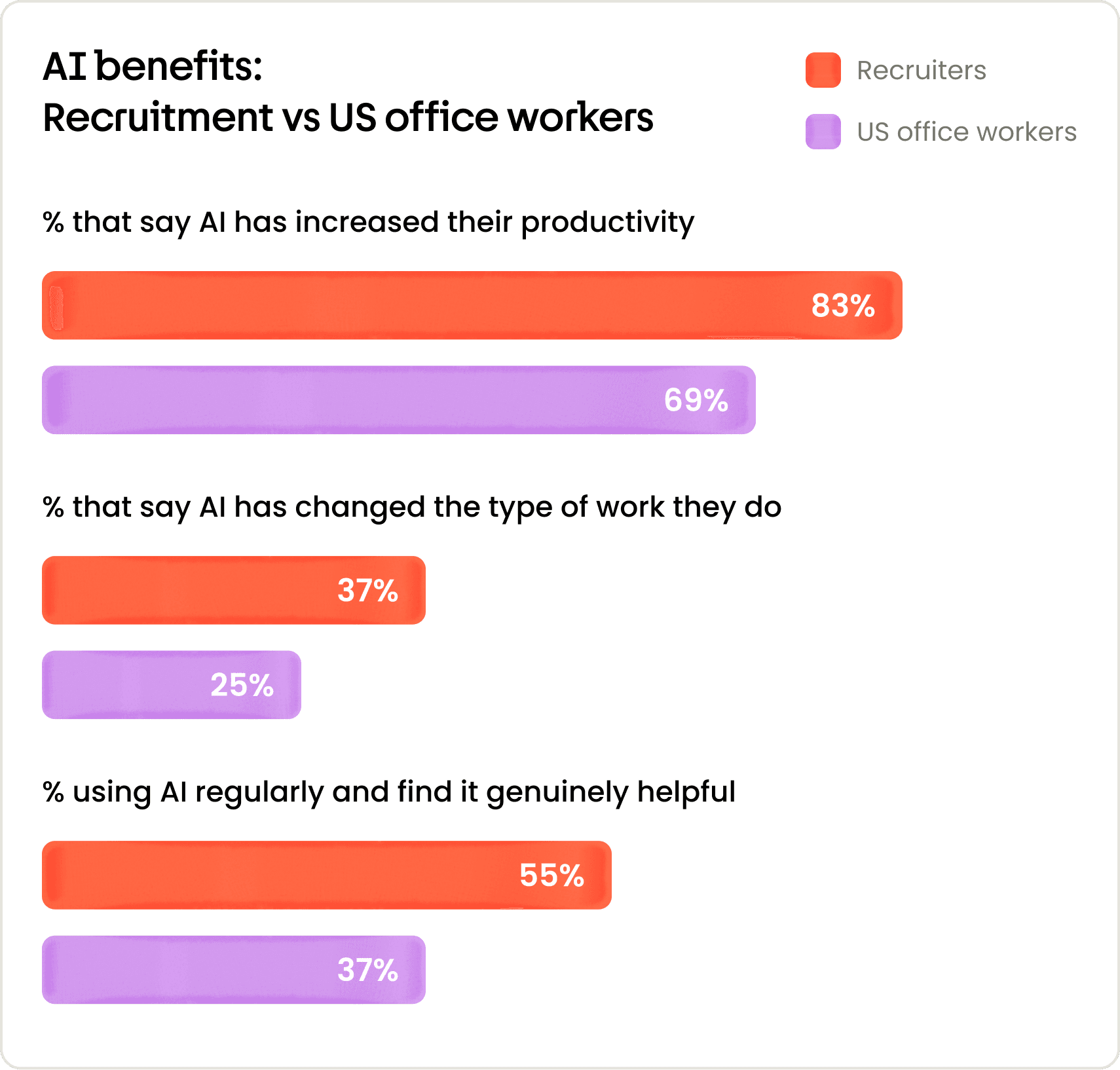
Within recruitment, adoption is translating into impact. 83% of recruiters say AI has increased their productivity, compared to just 69% of US office workers.
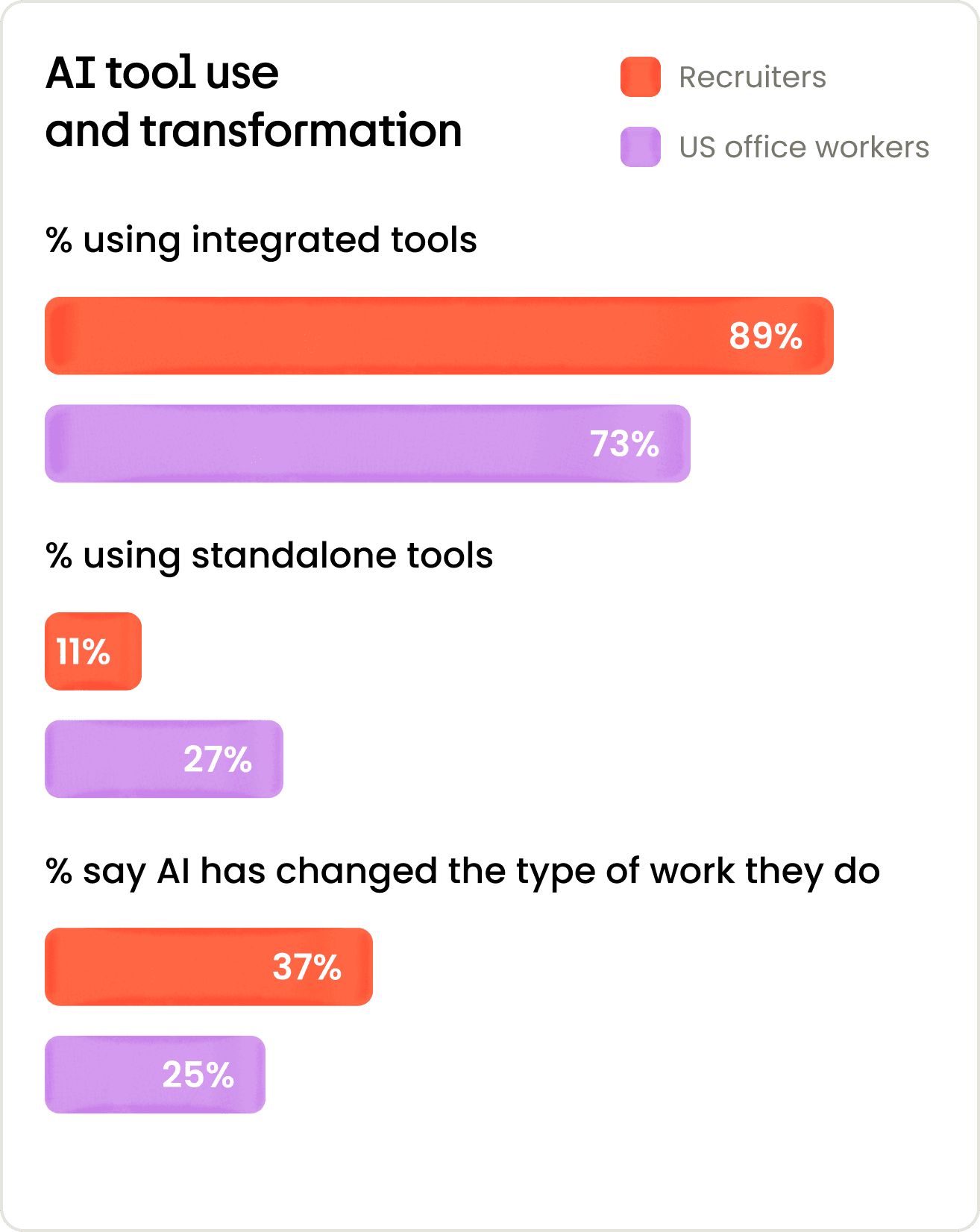
Unlike other industries, recruitment is also embracing sector-specific tools, notably integrated AI tools, at a high rate. Out of all of the industries surveyed, recruitment also has the highest proportion of workers who say AI has genuinely changed the type of work they do, at 37%.
These are the ‘AI Superworkers’; those benefiting the most from AI. Our main report found that integrated tools are the differentiator allowing this group to pull ahead. The fact that recruitment has adopted integrated AI at a high rate, shows its promise as AI leading industry.
Top findings:
- Recruitment leads the way on AI adoption with 98% reporting they have used AI.
- Recruitment has the highest proportion of workers who say AI has changed the type of work they are doing, suggesting that 37% of recruiters are now AI Superworkers.
- Recruiters have adopted sector-specific AI tools and more integrated tools than other industries.
Sample notes:
- This briefing covers 83 respondents identified as working in recruitment. See methodology for more information.
- ‘Main sample findings’ relate to the 2000 US office workers surveyed in the AI Productivity Trap Report. Also referred to within this report as ‘US office workers’.
Recruitment sets the bar for AI
Recruitment workflows are ideal for AI optimization
Recruiting is high-volume, repetitive, and document-heavy; exactly the kind of work that AI was built to accelerate.
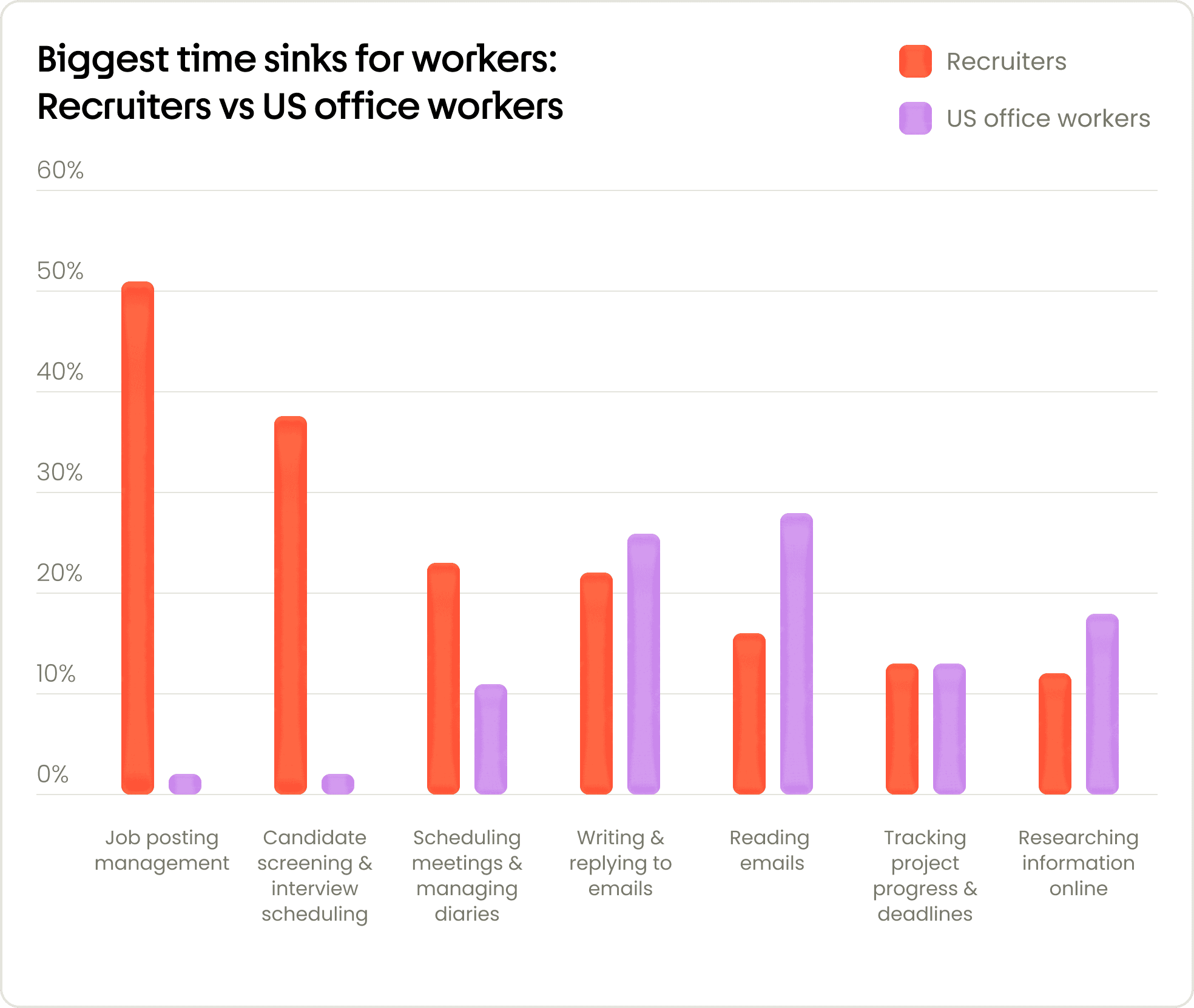
The biggest reported time sinks from our respondents were managing job postings and candidate screening. These are both sector-specific and time-consuming tasks that AI tools can, in theory, handle faster and at greater scale than any human team.
Other major time-sinks including scheduling meetings and interviews, plus writing and replying to emails, are also ripe for AI efficiency gains.
Recruiters are readily embracing AI adoption
Only 2% of recruiters surveyed reported that they had never used AI, and 65% said they use AI daily. Daily use is up 19 percentage points from our main sample findings, and was the highest out of any industry surveyed in our AI Productivity Trap Report.
This, in part, has been reactive to AI adoption on the candidate side. Use of generative AI tools has caused application volumes to surge, with recruiters left to quickly adopt and optimize AI tools to keep up with this increasing candidate demand.
Recruiters are benefiting from high AI productivity boosts
Recruiters we surveyed also reported high productivity, with 83% saying AI has made them more productive compared to just 69% in our main sample findings. Recruiters are also more likely to be using AI regularly and find that it is transforming the type of work they’re doing.
Leading the way on AI adoption, productivity gain and task transformation, recruitment is pulling ahead of every other industry surveyed on meaningful AI benefits.
AI tool use in recruitment
Recruiters are adopting sector-specific tools
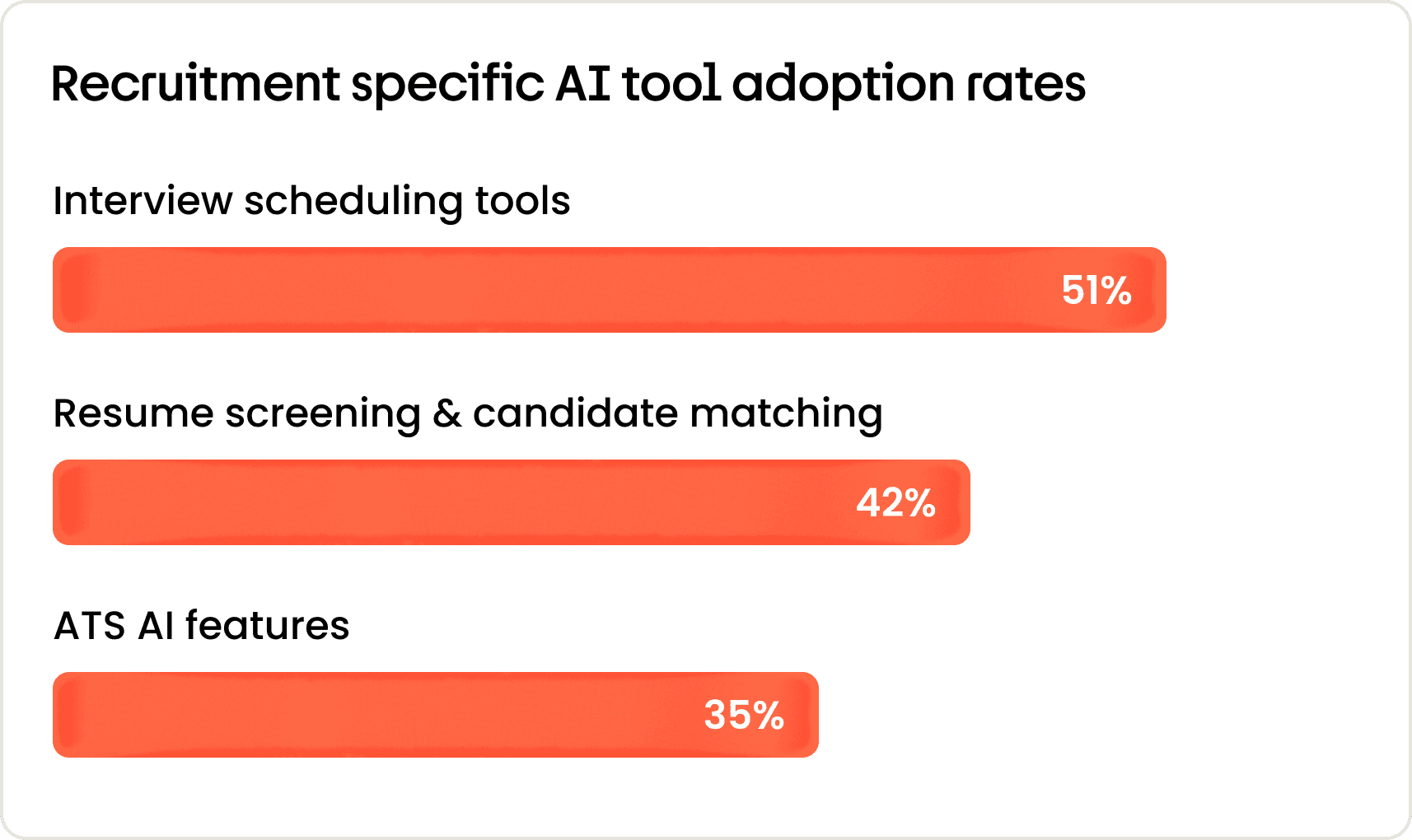
Recruiters appear to be adopting industry-specific AI tools faster than other sectors. These include tools for interview scheduling, resume screening and applicant tracking systems (ATS), built specifically for the recruitment workflow.
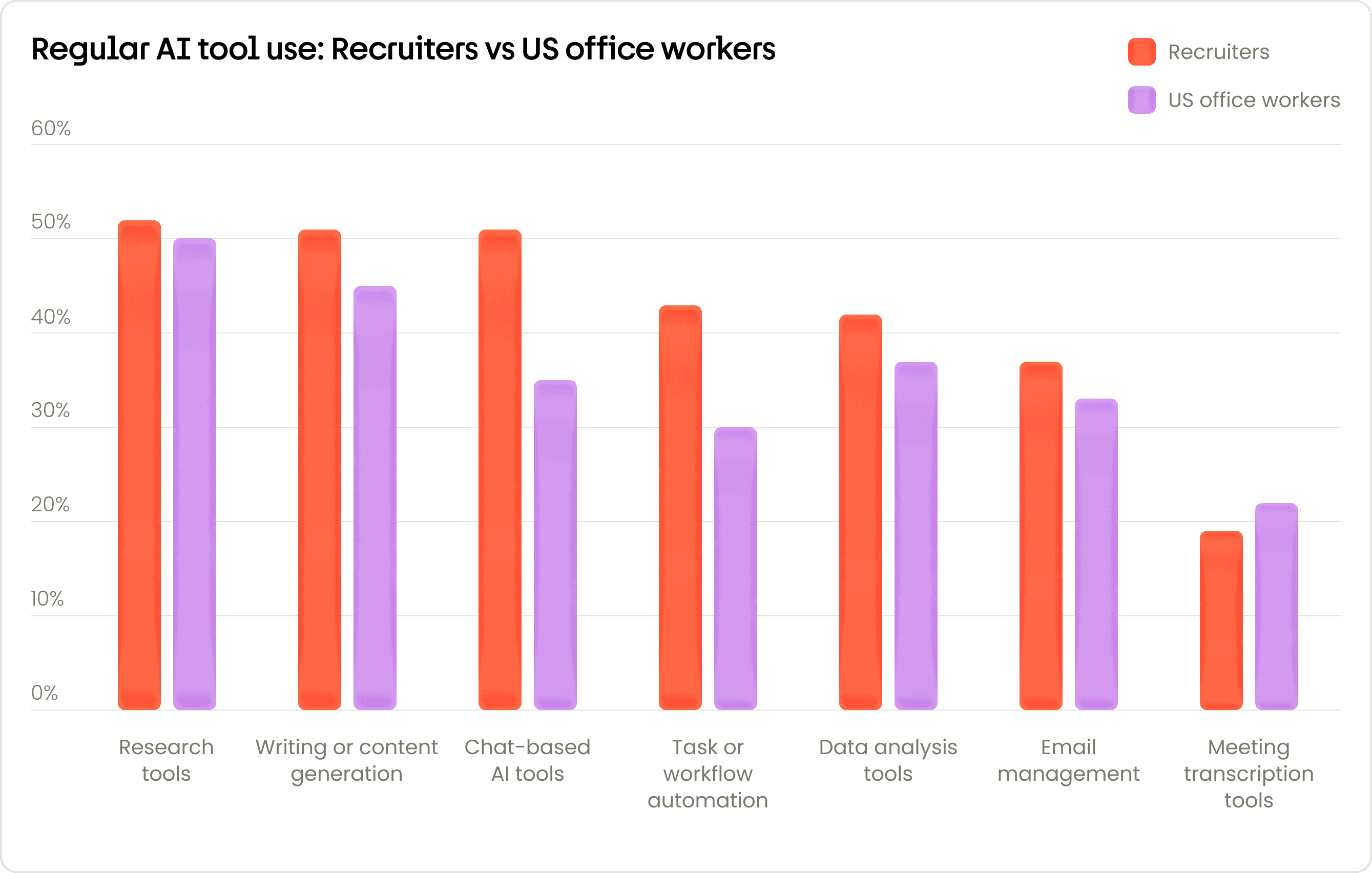
Interestingly, recruiters also reported using almost every type of AI tool more than the cross-sector average, including generative and chat-based AI.
Emerging is a picture of an industry that’s begun to use
AI deeper than the surface level, leveraging specific tools for specific tasks and embedding AI across their entire workflow.
Indications suggest integration is the differentiator
Integrated tools appear to be driving productivity gains
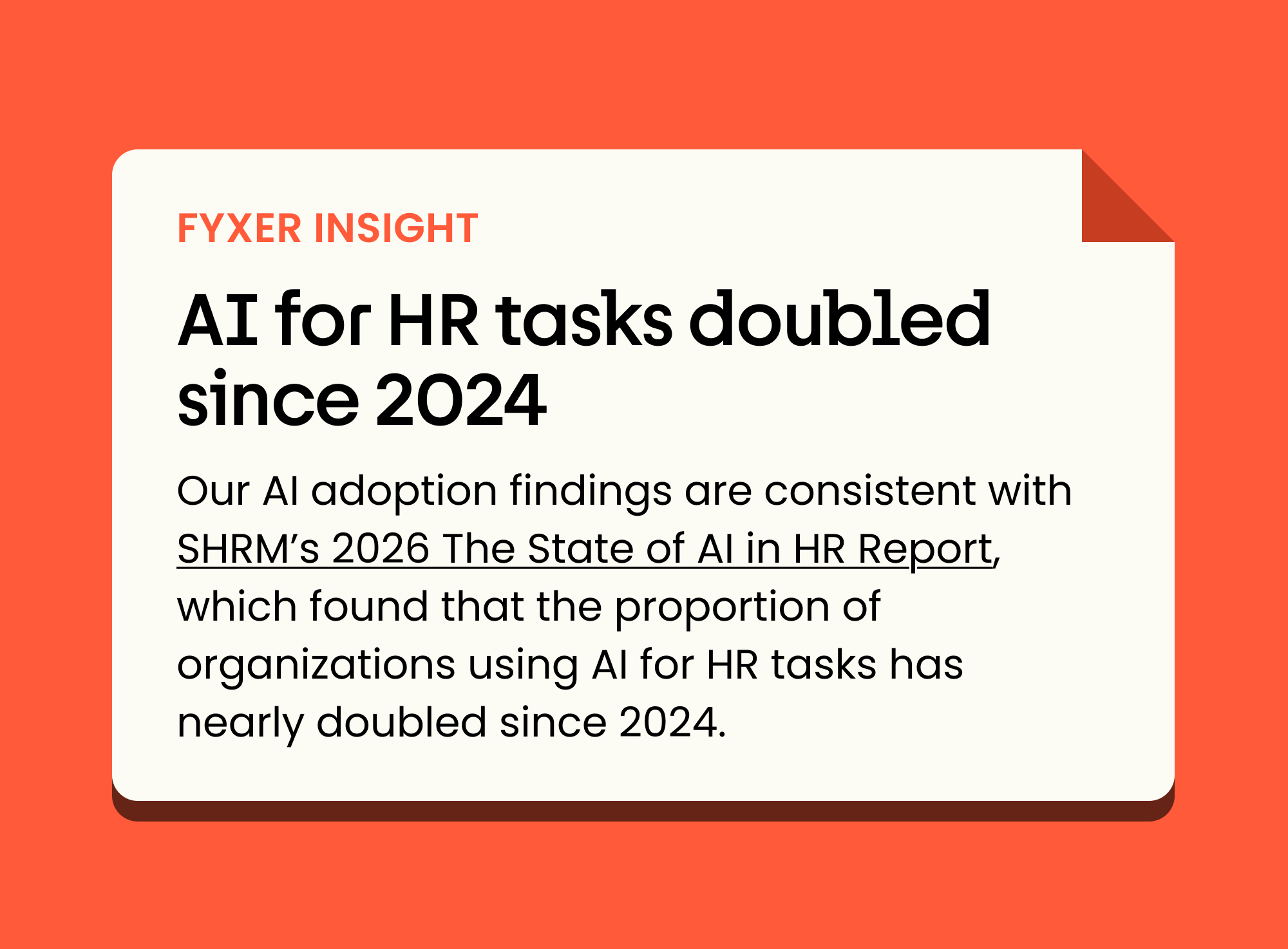
Fyxer’s 2026 AI Productivity Trap Report found that workers using fully integrated AI tools are 63 percentage points more productive than those using standalone tools. Integrated tools appear to hold the key to true AI transformation.
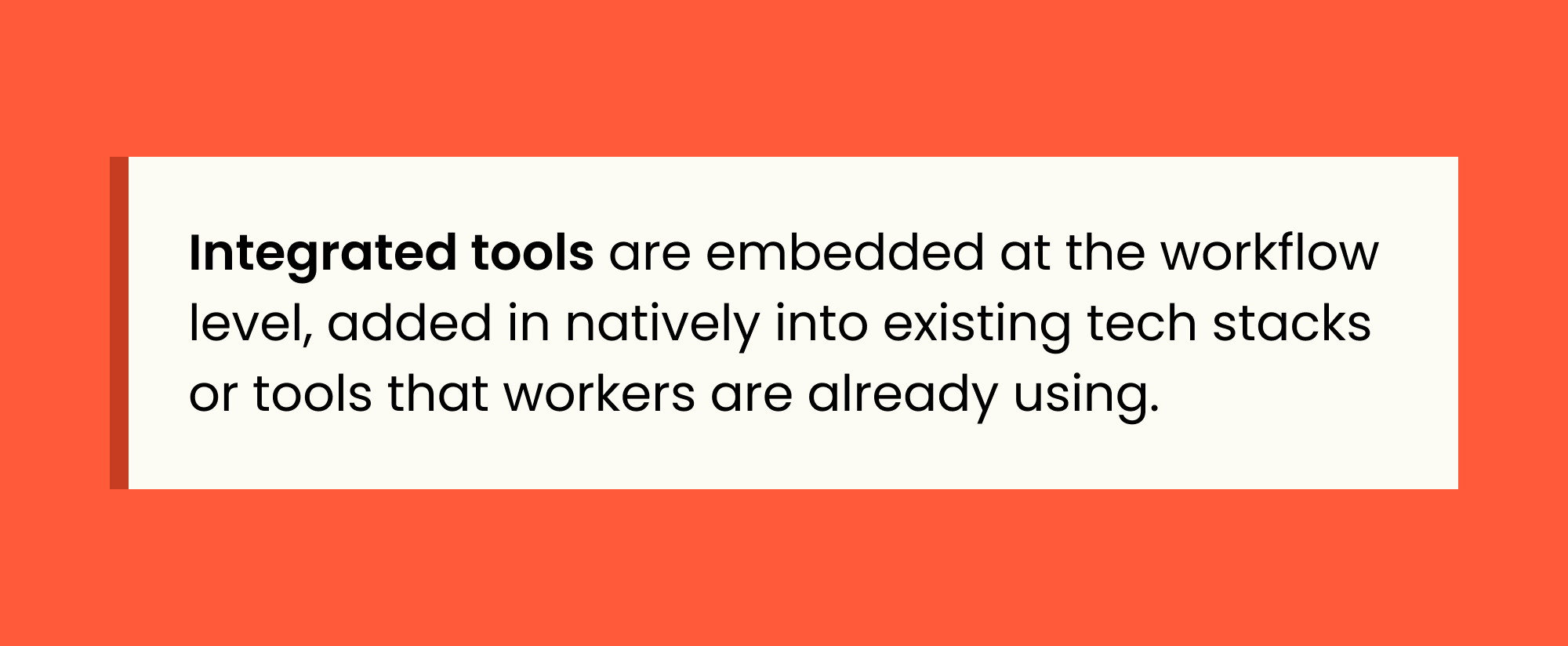
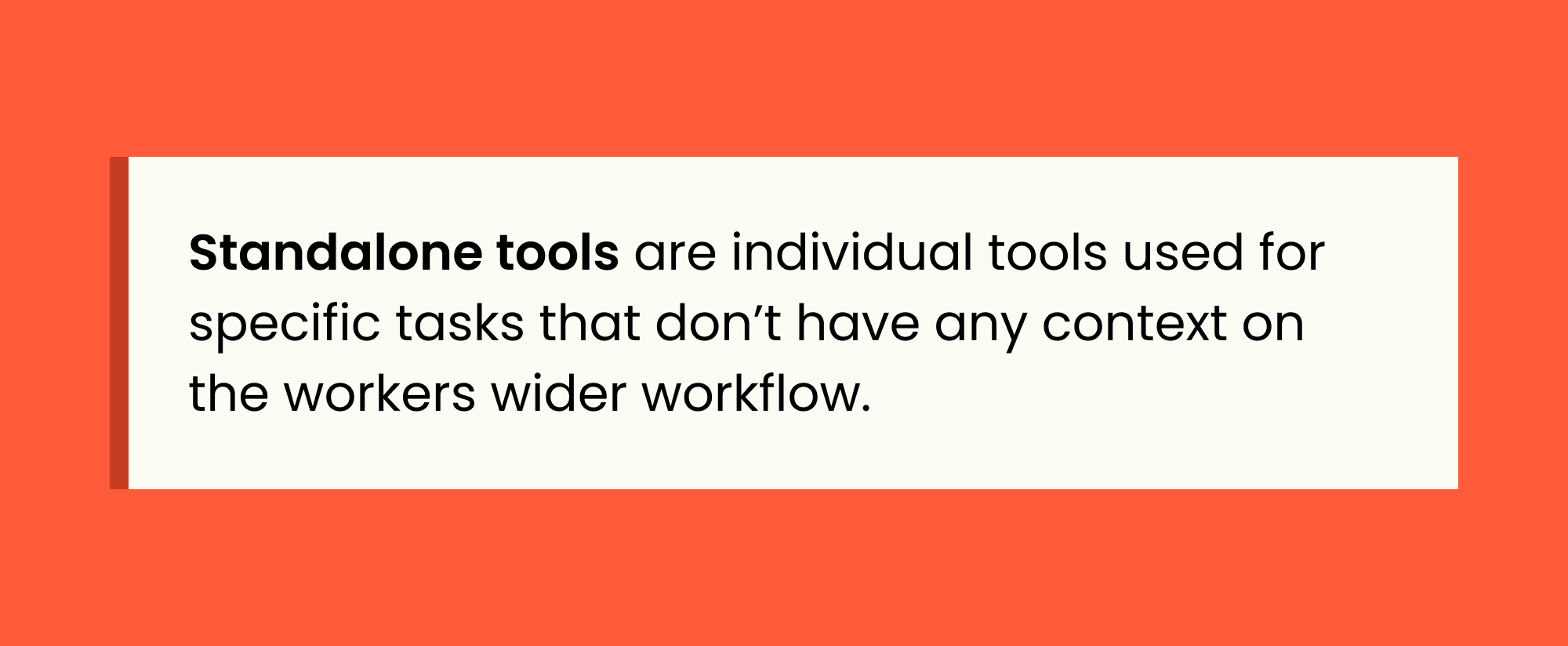
Our data suggests a similar pattern is emerging within recruitment. Recruiters are adopting integrated tools at a much higher rate than any other industry, 16 percentage points higher than the main sample findings.
How the AI Superworker is pulling ahead
Recruiters appear to be adopting industry-specific AI tools faster than other sectors. These include tools for interview scheduling, resume screening and applicant tracking systems (ATS), built specifically for the recruitment workflow.
Interestingly, recruiters also reported using almost every type of AI tool more than the cross-sector average, including generative and chat-based AI.
Emerging is a picture of an industry that’s begun to use AI deeper than the surface level, leveraging specific tools for specific tasks and embedding AI across their entire workflow.
Who are AI Superworkers?
Our AI Productivity Trap Report found that there were 3 key steps to the AI Superworker’s success:
- They use fully integrated tools at a high rate (62%)
- They self-select their own tools at a high rate (67%)
- They cover their entire workflow, with AI present at every stage for every task
The AI gender gap may have reversed
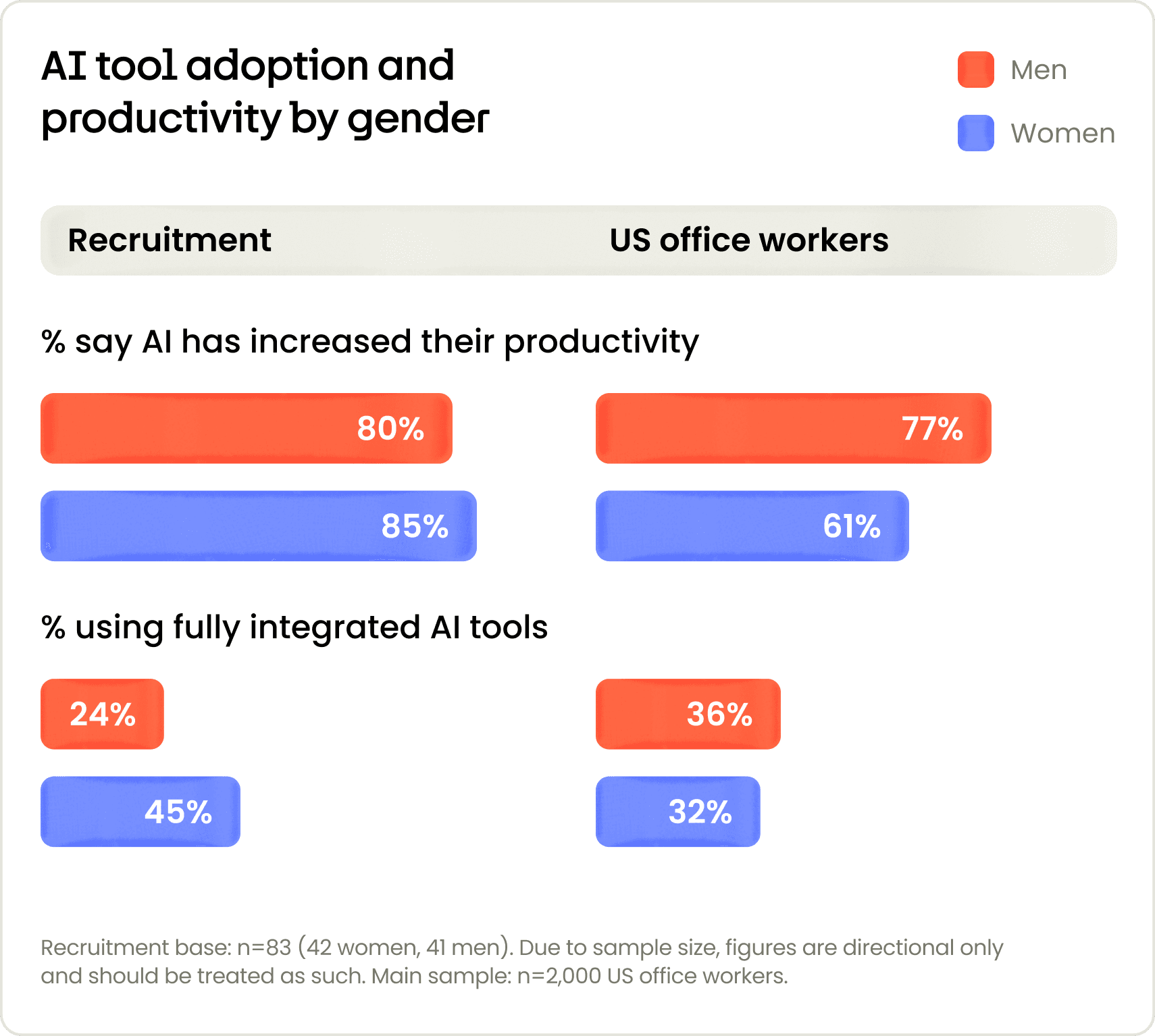
Our AI Productivity Trap Report found that men were using more AI than women, including more integrated AI, and reporting higher AI productivity gains.
Although our gender sample is directional due to sample size, in recruitment there are indications that this pattern may flip.
85% of women recruiters say AI has boosted their productivity, ahead of 80% of men. Although women are still slightly less likely to be using AI overall (95% vs 100%), they also report that they are more likely to work with fully integrated tools: 45% vs 24% of men.
Integration is the story here. It's possible that when women get AI built into their workflow rather than bolted on, they are able to drive more productivity.
Sample note:
Recruitment base: n=83 (42 women, 41 men). Due to sample size, figures are directional only
and should be treated as such. Main sample: n=2,000 US office workers.
How to optimize for further AI gains
Sustaining the AI momentum within recruitment
Recruitment is ahead of the curve. Of every sector surveyed, it leads on daily AI use, productivity gains, and the proportion of workers who say AI has fundamentally changed the type of work they do. This is a sector that has moved beyond surface-level adoption to embrace sector-specific tools and embed AI more deeply into existing workflows.
Our main sample findings show a clear link between integrated tools and AI transformation. Recruitment's higher rate of integrated tool adoption—16 percentage points above US office workers overall—may go a long way to explaining why the sector is pulling ahead.
Recruitment has already answered the question of whether AI works. Again, out
of every sector surveyed, recruiters are
the most optimistic about the future of AI, with 85% stating that they expect AI to make their job easier over the next 12 months. The opportunity now is to close the gaps that remain and ensure momentum is sustained.
Three actions to drive further optimization
Prioritize integration over adoption
Recruiters are already using more AI than workers in other sectors. Our main sample findings indicate that AI transformation occurs not from adding more tools, but from embedding them more deeply into existing workflows.
Invest in sector-specific tooling
These purpose-built tools, designed around the specific demands of the recruitment workflow, appear to be a meaningful driver of the sector's AI advantage. Organizations not yet using sector-specific tools, or those addressing major time sinks are leaving efficiency gains on the table.
Encourage self-selection of tools
Rather than top-down mandates, empower employees to self-select integrated or sector-specific AI tools that tackle their workflow bottlenecks. Our main sample findings indicated that self-selection drives better outcomes and for recruiters where work is mostly autonomous, this could drive meaningful gains.
Methodology
About this research
This report is built from primary data collected for Fyxer by OnePoll, an independent market research company. OnePoll surveyed 2,000 US office workers. This report covers 83 respondents identified as working in the recruitment sector. Data on gender should be treated as directional rather than statistically definitive, due to small sample sizes of 42 women and 41 men. AI Superworkers within recruitment is based on a sub-sample of 30 respondents. Patterns are consistent with the broader cross-sector average dataset and should be quoted in that context.
Causation note: Fyxer conducted an OLS regression with productivity increase (Q14a) as the dependent variable. Independent variables included integration level (Q11), number of tools (Q10), self-selection (Q16), seniority, generation, and gender. Integration level remained a significant independent predictor of productivity outcomes (p<0.01) after controlling for all other variables. A separate regression confirmed integration independently predicts stress outcomes in both directions (p<0.01), with seniority not significant in either model.
About Fyxer
Fyxer is the email assistant that organizes your inbox, writes draft replies and takes actionable meeting notes, embedded directly into Gmail and Outlook. Fyxer processed 1.4 billion emails in 2025 and saves users an average of one hour a day on avoidable inbox admin.
This report is part of the Fyxer AI Productivity Gap Report series.
Press enquiries: press@fyxer.com