
Back to Admin Burden Home


The AI Productivity Trap
AI hasn't delivered on its productivity promise. New research surveying 2000 US office workers reveals a gaping ~$2.6 trillion productivity gap within the US workforce. This report digs into why and how employers can drive real AI transformation.
Fyxer Research Team • June 2026
Executive Summary
Integration is the new adoption
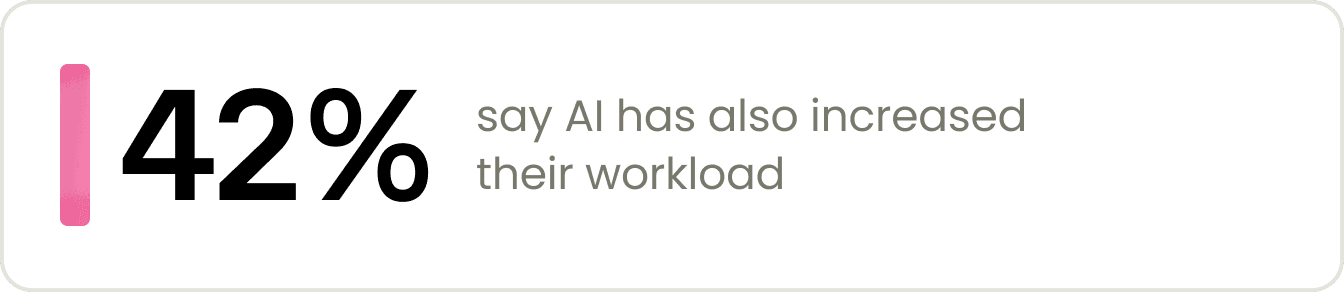
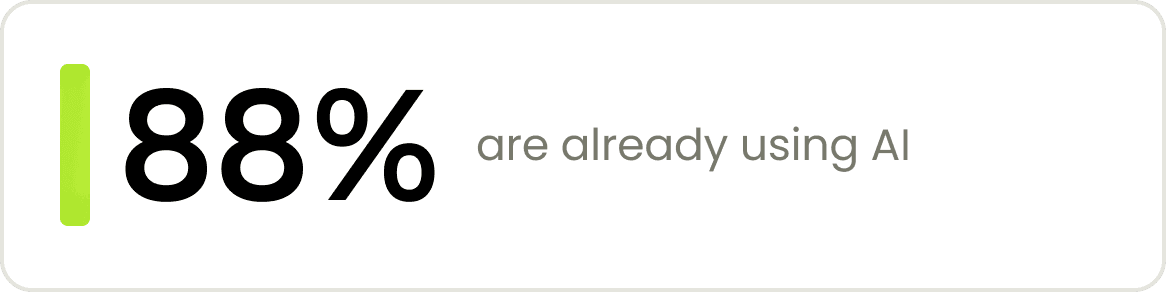
Mass rollout of AI promised improved productivity; time freed for higher-value work and a surge in employee efficiency. Halfway through 2026, now with 88% of US office workers using AI, that promise has only been partially met. 69% say AI has made them more productive, but 42% say it's also increased their workload.
The workers pulling ahead aren't using more generic AI. They're using different AI. Workers using integrated tools, those that are embedded at the workflow level, are 63 percentage points more productive than those using standalone tools.
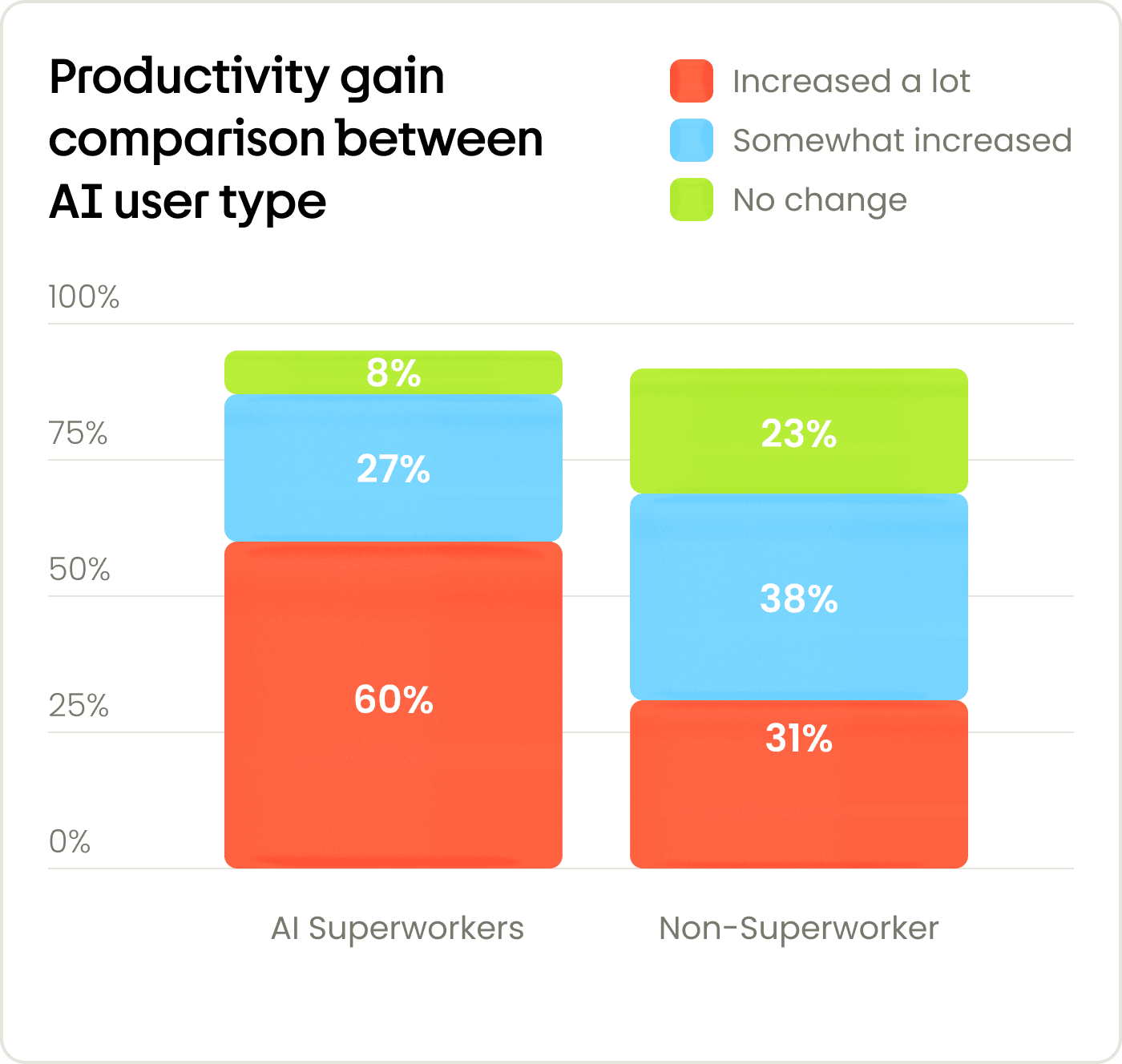
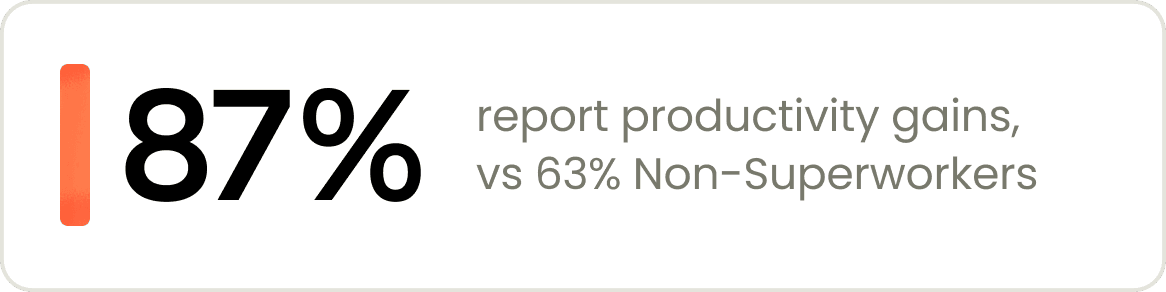
Integrated tools have also allowed for a new type of AI user to emerge, the ‘AI Superworker’—25% of the AI workforce who are genuinely changing the nature of their work, with 87% reporting that AI has made them more productive.
New data, commissioned by Fyxer from OnePoll, surveyed 2,000 US office workers. It shows that $2.6 trillion in productivity gains may sit unrealized throughout the US workforce; not because workers won't or don’t know how to use AI, but because most are using the wrong type.
What we found
- The AI productivity gap may be leaving $2.6 trillion on the table in unrealized productivity gains.
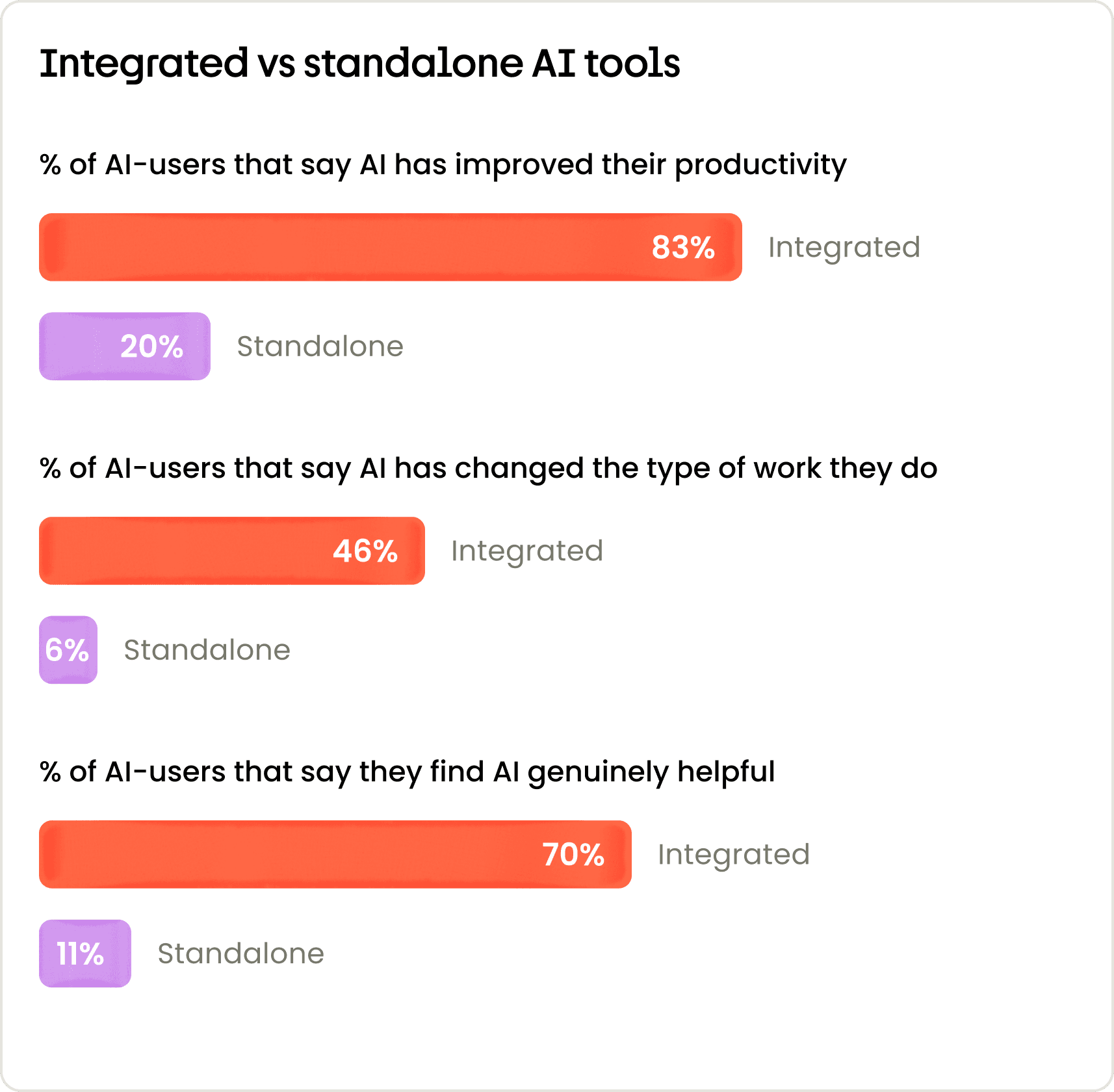
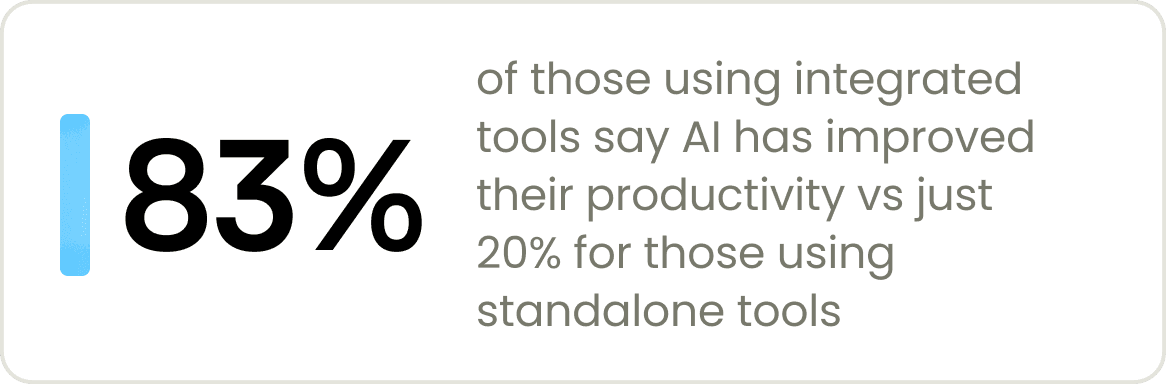
- Integrated tools are the key to AI optimization. 83% of those using integrated tools say AI has increased their productivity, compared to just 20% for those using standalone tools.
- The AI Superworkers, currently only 25% of AI-users, are the only ones tapping into AI’s full potential by using integrated tools to transform the nature of their work.
Topline recommendations
- Focus on integrated tools, embedded at the workflow level.
- Tackle email first, the channel contributing to the biggest time-sink and admin burden.
- Let employees choose their own tools. Self-selection drives better outcomes.
The AI Enablement Illusion
88% of US office workers now use AI.
But 42% say it has increased their workload. Mass rollout of standalone
AI tools has not been enough to meaningfully transform work.
AI adoption is now near universal
Since the public release of ChatGPT in 2022, employers have pushed hard on AI adoption. This has been driven by the assumption that if workers were using AI, productivity gains would automatically be unlocked. By 2025, it was clear that just adoption wasn’t enough, with BCG reporting that 60% of companies were generating no value from AI.
In January 2026, Fyxer’s first Admin Burden Index found office workers frustrated. 74% thought AI had improved their work but only 35% felt fully equipped with the right AI tools.
Six months on, we’ve dug deeper into the adoption puzzle. 88% now report that they are using AI in some form. And their outlook is positive, employees want AI. Convincing workers to adopt tools is no longer the challenge. The question is now, do they have the right ones?
AI rollout recap:
HYPE ERA
- 2022: ChatGPT launches publicly: 100 million users join within 2 months
- 2023: AI mandates adopted by enterprise: license rollouts deployed at scale
- 2024: Productivity promise peaks: analysts forecast trillions in gains, pushing further deployments
REALITY CHECK
- 2025: AI value not materializing: BCG reports 60% of companies generating no value from AI
- 2026: Fyxer Admin Burden Index: 2 in 3 report AI tools are partial, ineffective or insufficient
- 2026: AI tools linked to burnout: HBR study concludes AI intensifies work, instead of reducing it
MEANINGFUL TRANSFORMATION
- 2026: Fyxer AI Productivity Trap: Integration, not adoption, identified as the key AI productivity driver
AI is saving time, but generating more work
Most workers say that AI is improving their productivity; it’s saving them time and making them more efficient. But nearly half also say that AI is generating more work, and almost a third say that their stress levels have increased since the adoption of AI tools. Productivity gains are offset by heightened stress and exacerbated workloads.
AI is creating a new kind of admin
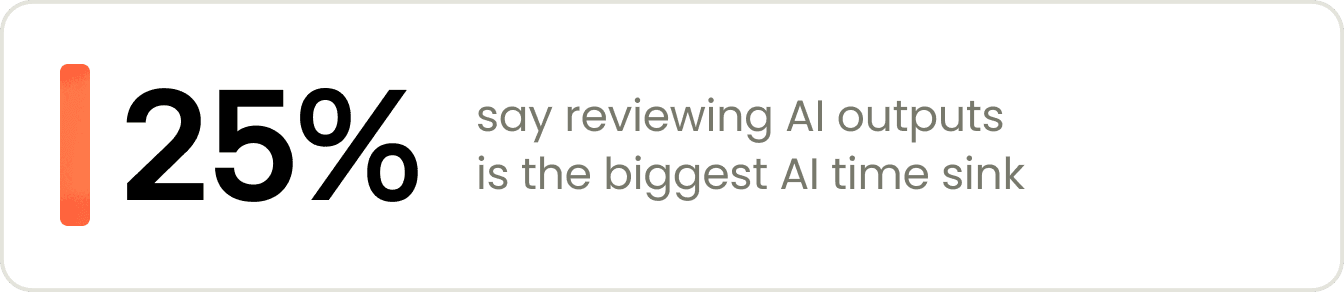
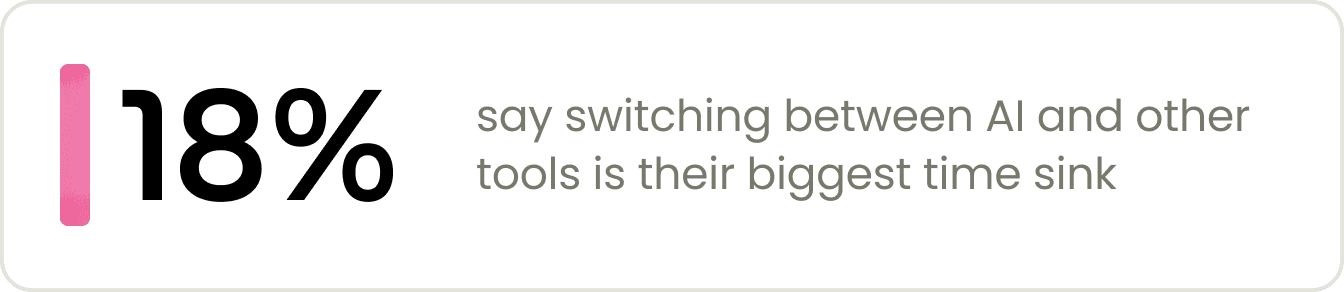
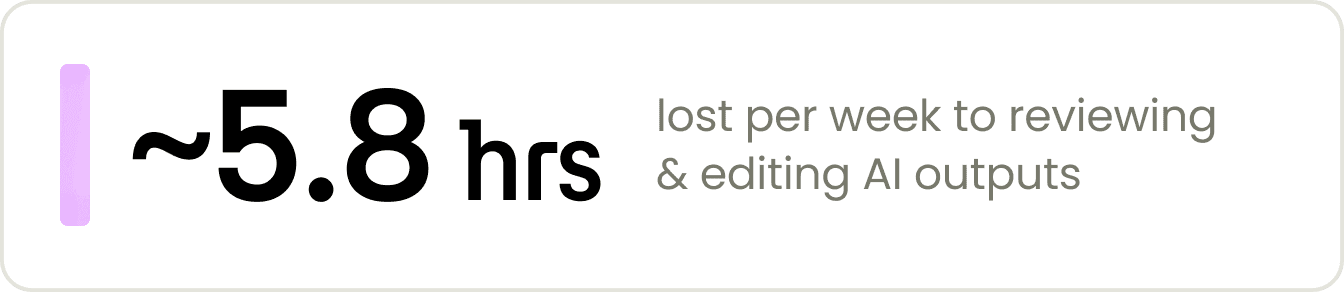
Time spent overseeing AI outputs has silently created a new type of workflow admin. Time savings experienced when using most AI tools are being eaten up by workers having to review outputs for accuracy, edit drafts, prompt from scratch and context-switch between tools.
This ‘AI re-do’, having to rework the AI output and oversee tools, is now a measurable weekly admin burden. It runs alongside productivity gains to produce friction.
Email is the biggest time sink
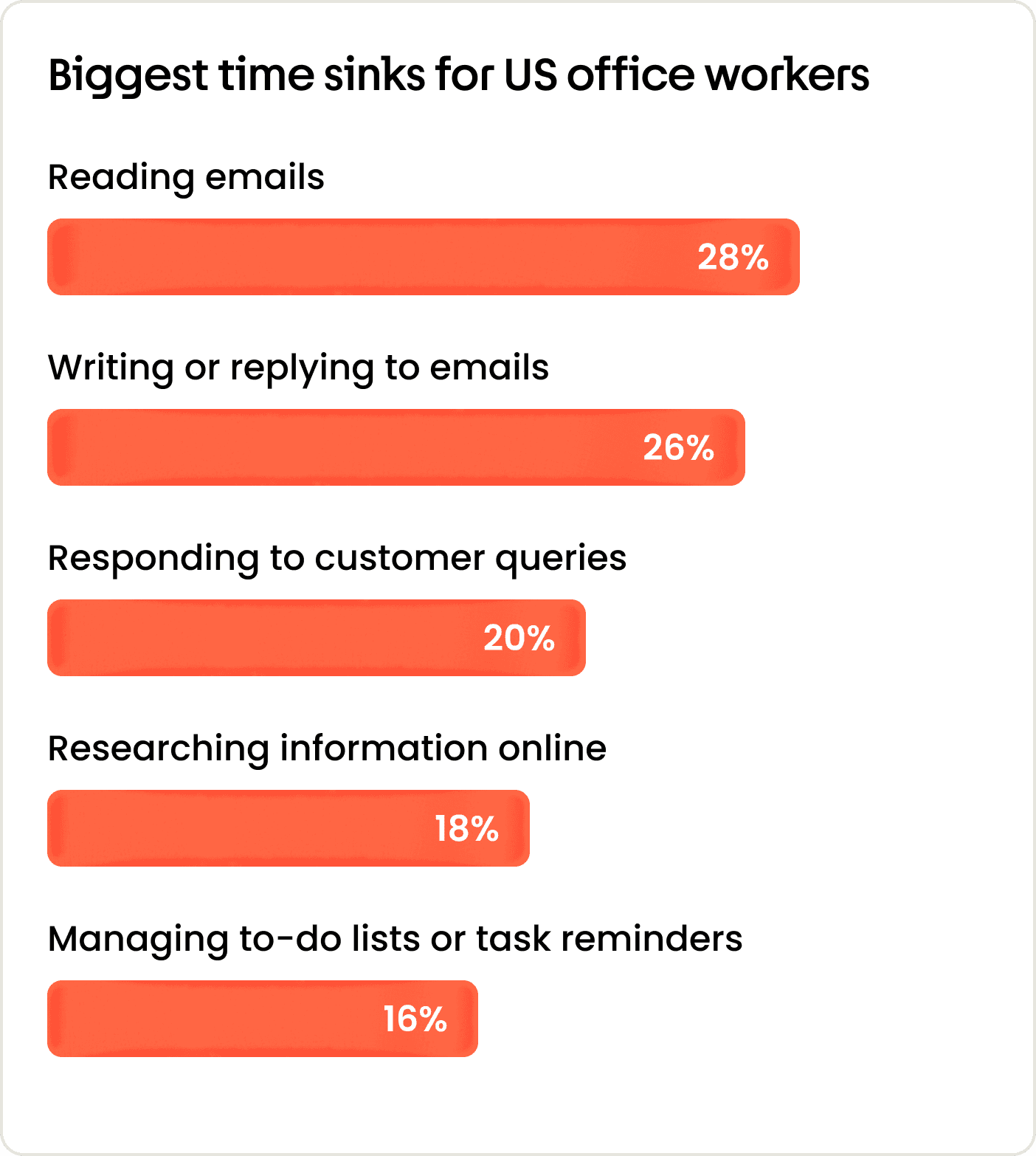
Fyxer’s first Admin Burden Index found that the biggest time drain for workers was email, followed by responding to customer queries, research and keeping up to date with to-do lists. Six months on, this is unchanged.
With only 30% of employees using AI to write emails and a meager 22% using it to read emails, the inbox is the biggest untapped opportunity for AI automation.
Fyxer insight: 70% of inbox activity is just noise.
Fyxer has processed 1.59 billion emails as of June 2026, averaging 63 emails per day, per user. Marketing emails and notifications consistently drive a significant proportion of emails workers receive—distractions that deliver no organizational value.
The AI Integration Gap
Workers using fully integrated AI tools, with embedded workflows or stacks, are 63 percentage points more productive than those using standalone tools.
Integrated tools are the differentiator
At the heart of this productivity paradox is not adoption, but the type of AI being used.
Integrated AI tools, ones that are embedded into existing workflows, that natively interact with tools workers are already using, are generating dramatic productivity boosts. This is a stark contrast to the slim gains for isolated, standalone tools.
There’s a 59 percentage point difference between integrated and standalone tool users who report that they find AI genuinely helpful. Those using integrated tools are also experiencing task transformation. 46% report AI has changed the type of work they do compared to only 6% for standalone users.
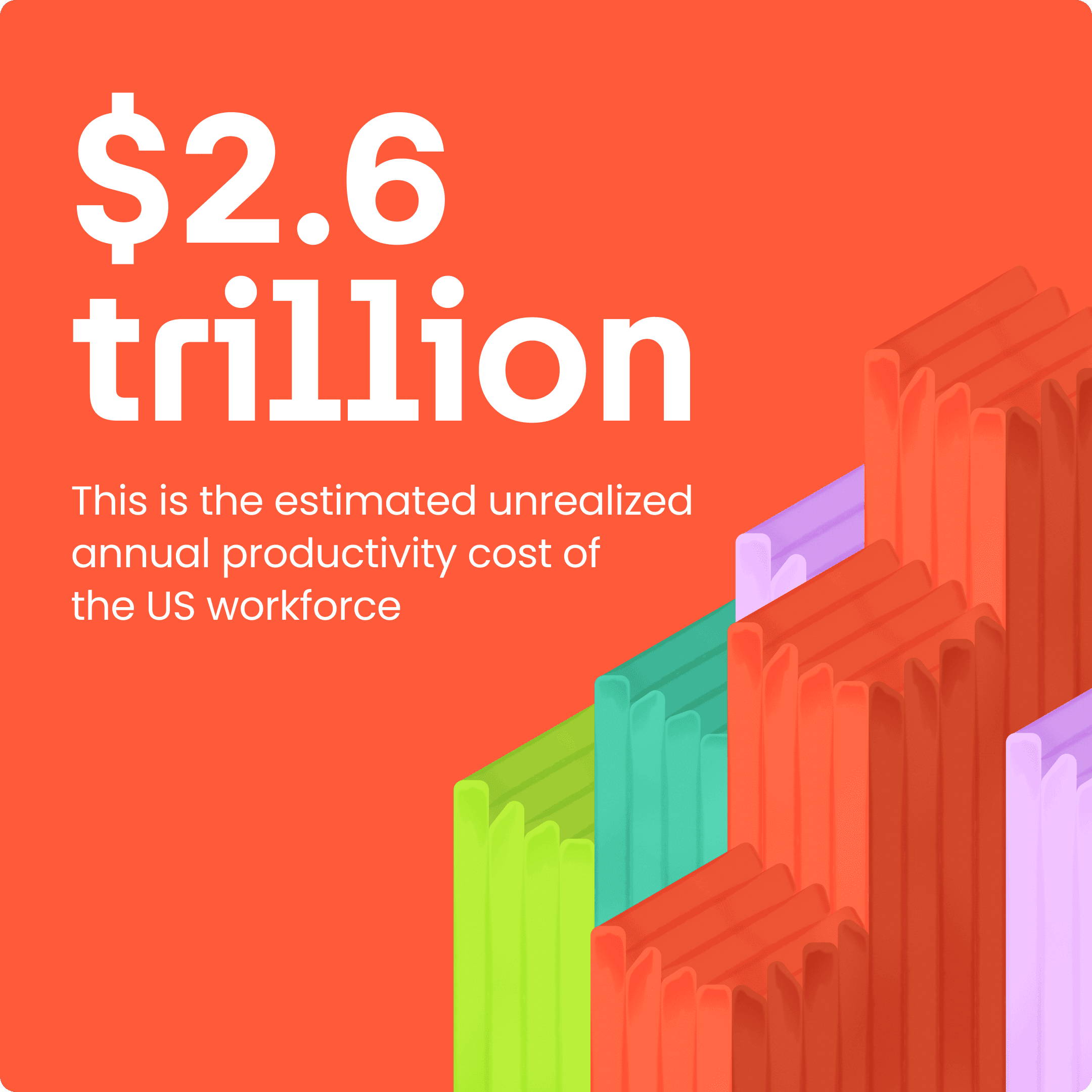
$2.6 trillion could be left on the table
This is the estimated unrealized annual productivity cost of the US workforce.
If AI was optimized to its full potential, and the 63 percentage point productivity gap between those using integrated tools and those using standalone tools was closed, ~$41,540 per worker per year could be realized.
- ~$41,540 per worker, per year
- ~61 million US workers not using AI to its full potential
- 63 percentage point difference in productivity between integrated and standalone tool users
Productivity exponentially increases with more tools
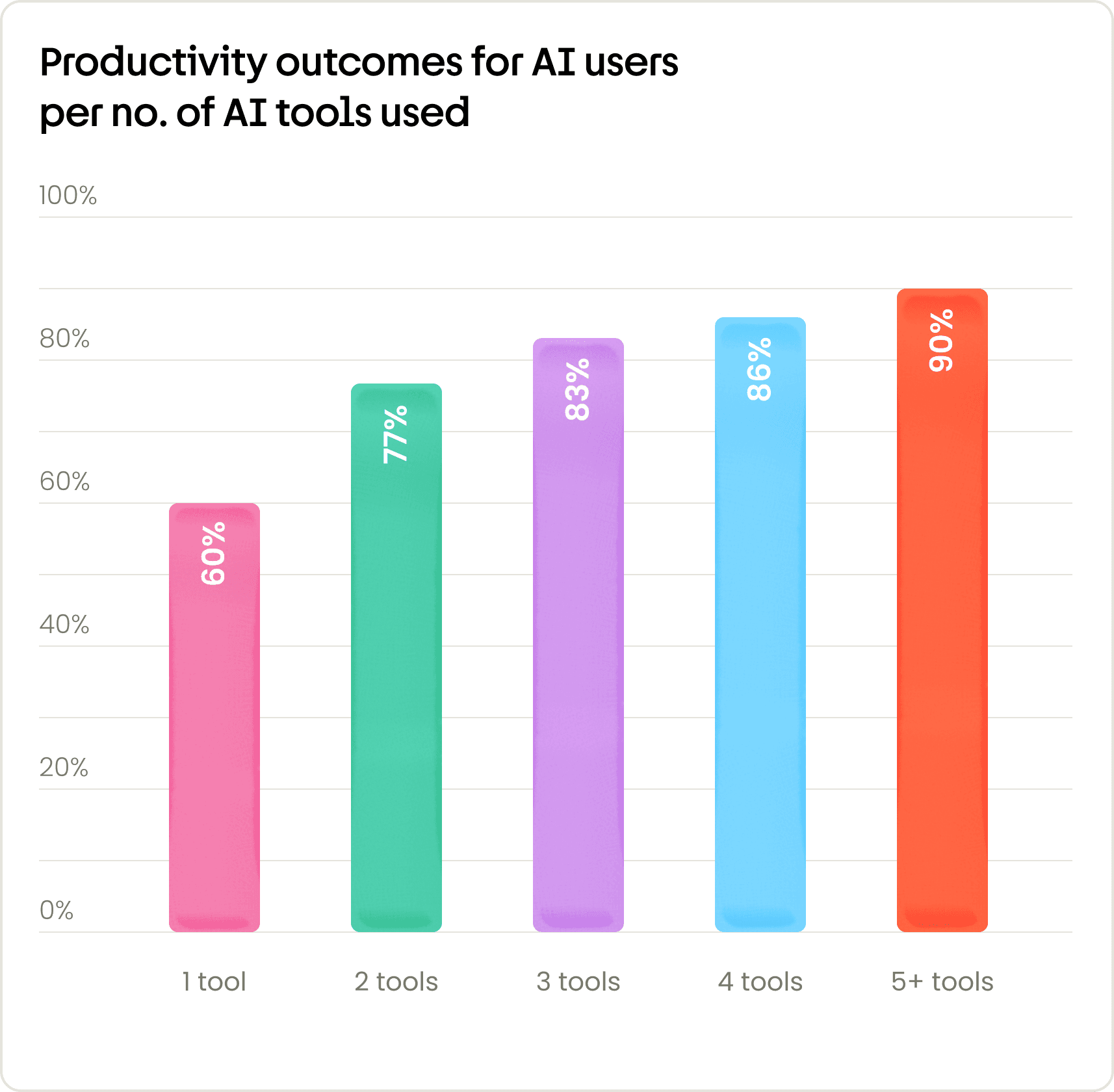
With one AI tool, the productivity gain is 60%. With two it’s 77%. At 5+ productivity rises 90%. But with more tools comes more context-switching and more workflows to manage. BCG’s research found that using more than three AI tools simultaneously is linked to more mental fatigue and greater information overload—coined ‘AI Brain Fry’.
The data confirms that meaningful productivity gains occur when AI is applied across multiple tasks. Integrated tools that collapse multiple tasks into one workflow offer the best solution, with less context-switching and less to manage for the user. This is the sweet spot.
Meet the AI Superworkers
Integrated tools have created a new type of AI user. Fulfilling AI’s promise of transforming the nature of work, 46% of integrated tool users (25% of AI-users overall) report that they’ve completely transformed the type of work they’re
doing with AI.
1 in 4 AI users have experienced transformative change
A quarter of AI users, the ‘AI Superworkers’, are now fully optimizing AI. 87% say AI has made them more productive.
AI Superworkers have adopted tools in a fundamentally different way. This is the key differentiator. Instead of simply using AI more, they’re using it differently. These users are deploying self-selected AI across their entire workflow and crucially, using integrated AI tools at a much higher rate. 46% of those using integrated tools are AI Superworkers.
Those who are experiencing the full benefits of AI—a transformation in how they work, are not determined by seniority, gender or age, but by the type of AI tools they’re using.
The AI Superworker toolkit
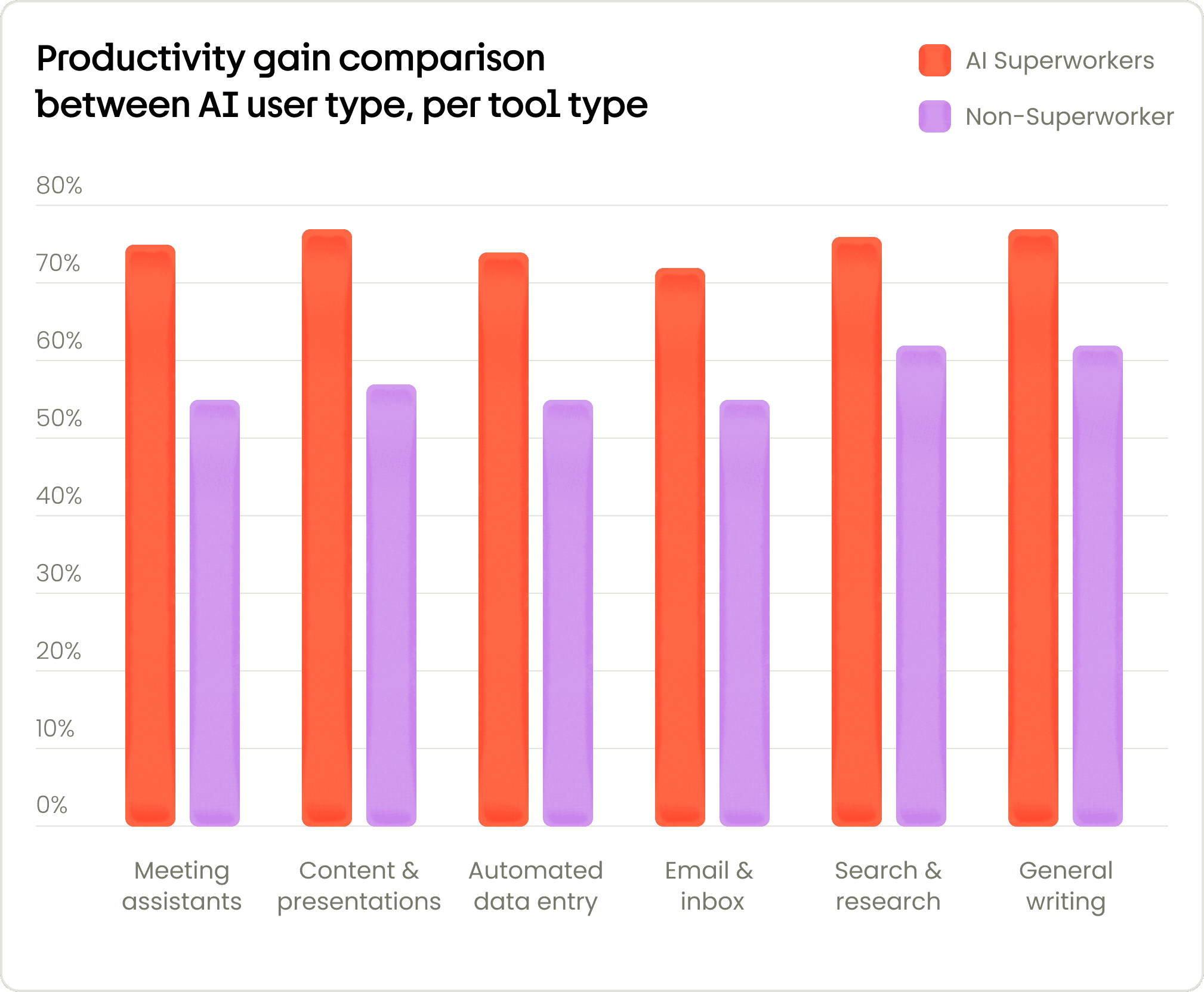
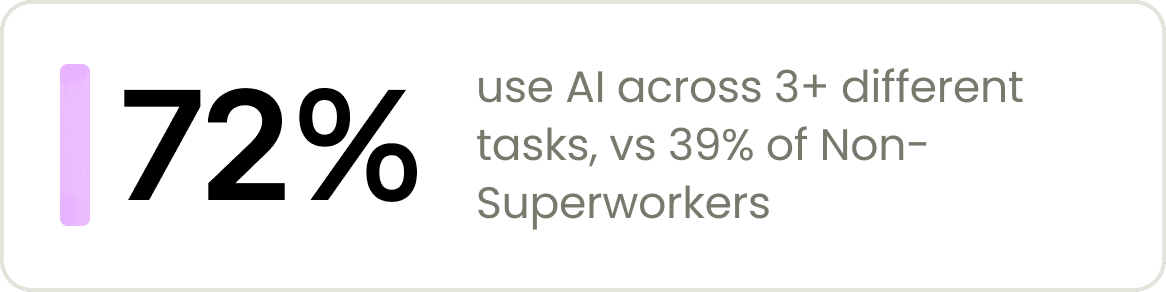
AI Superworkers use AI across a range of tasks, not just writing. Rather than stacking standalone tools for each task, they’ve rebuilt their workflow around AI. Every part of their daily workflow is embedded with integrated tools to tackle research, meetings, documents and email. AI is automatically present at every stage.
Non-superworkers on the other hand, tend to rely on generative AI tools, meaning they miss out on benefits from integrated tools, like email assistants and notetakers.
AI Superworkers are benefiting from improved productivity gains across every tool type, when compared to non-superworkers. They also report reduced stress at nearly three times the rate of standalone tool users. They are pulling ahead, across every type of work they do.
The AI Superworker's 3 steps to success
They integrate instead of switching
The top performers have AI embedded inside the foundational software they already use, like their inboxes and calendars. They don’t tab out to a chatbot. Workers running standalone tools do the work twice. They generate in AI, then switch back to apply it. The integration is where the time saving is.
The choose their own tools
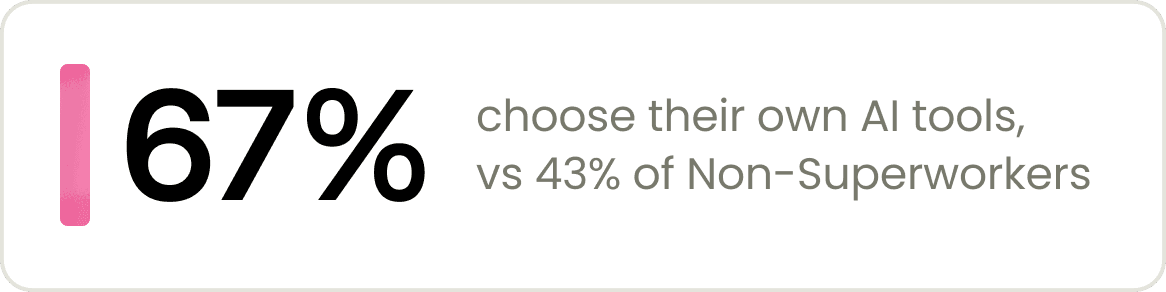
AI Superworkers self-select their own tools at a much higher rate than all other AI users. This correlates with higher productivity gains, suggesting self-selected tools drive better outcomes than top-down mandates. A gap driven entirely by fit and adoption.
They cover their whole workflow
AI Superworkers use AI across research, writing, email, data, meetings and scheduling, not just for one task. Workers with standalone tools default to a single use case, like using a generative chatbot. Integrated workers use AI in a dozen different contexts every day.
Demographic Splits
Integrated tools have created a new
type of AI user. Fulfilling AI’s promise of transforming the nature of work, 46% of integrated tool users (25% of AI-users overall) report that they’ve completely transformed the type of work they’re
doing with AI.
The productivity gap exists in every sector
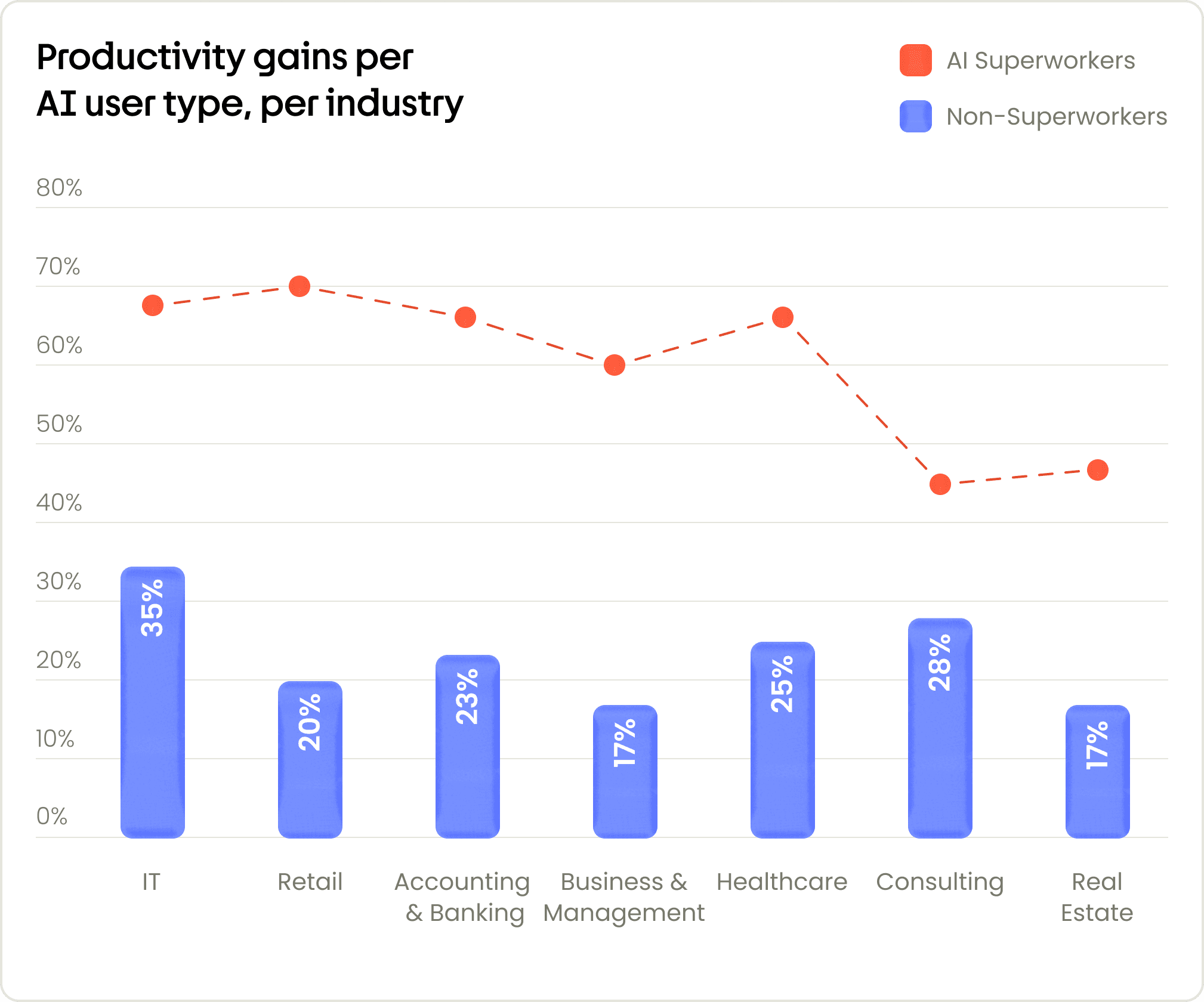
Across all of the industries analyzed, the productivity gap persists—but to varying degrees. Whilst the industry specific results for Superworkers should be treated as directional due to small sample sizes, a similar pattern for productivity gains is emerging.
Retail had the highest productivity gap between AI Superworkers and non-superworkers at 50 percentage points. Consulting had the smallest, with just 17 percentage points. It is likely that the Superworker profile exists across all sectors.
AI rewards experience not just fluency
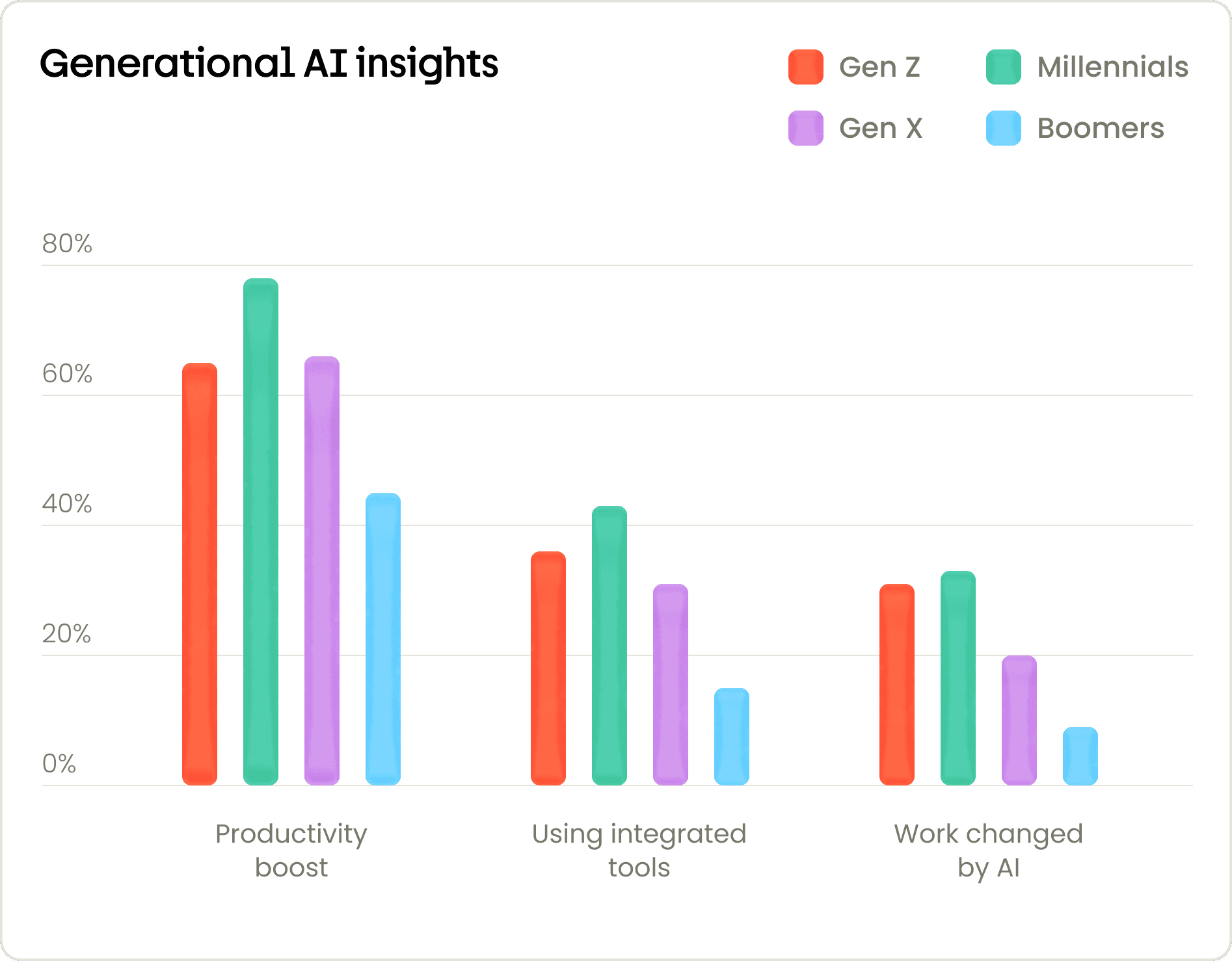
Gen Z are usually regarded as the most AI fluent. But our data points to Millennials as uniquely positioned to gain the most from AI. An integral part of optimizing with AI is the experience to know exactly which parts of your job AI can genuinely transform.
Millennials, now in their 30s and 40s, likely sitting in middle managerial positions, are the generation that combines the right amount of digital fluency and openness to AI, with real workflow experience.
Boomers lag behind
Just 15% of Boomers have AI fully integrated vs 42% of Millennials. Boomers represent a smaller share of the active workforce and are more likely to be self-employed or part-time. Within our data there was also a high percentage of Boomers present within Sales. These factors may limit employer-driven AI adoption.
Productivity gains aren't distributed equally across gender
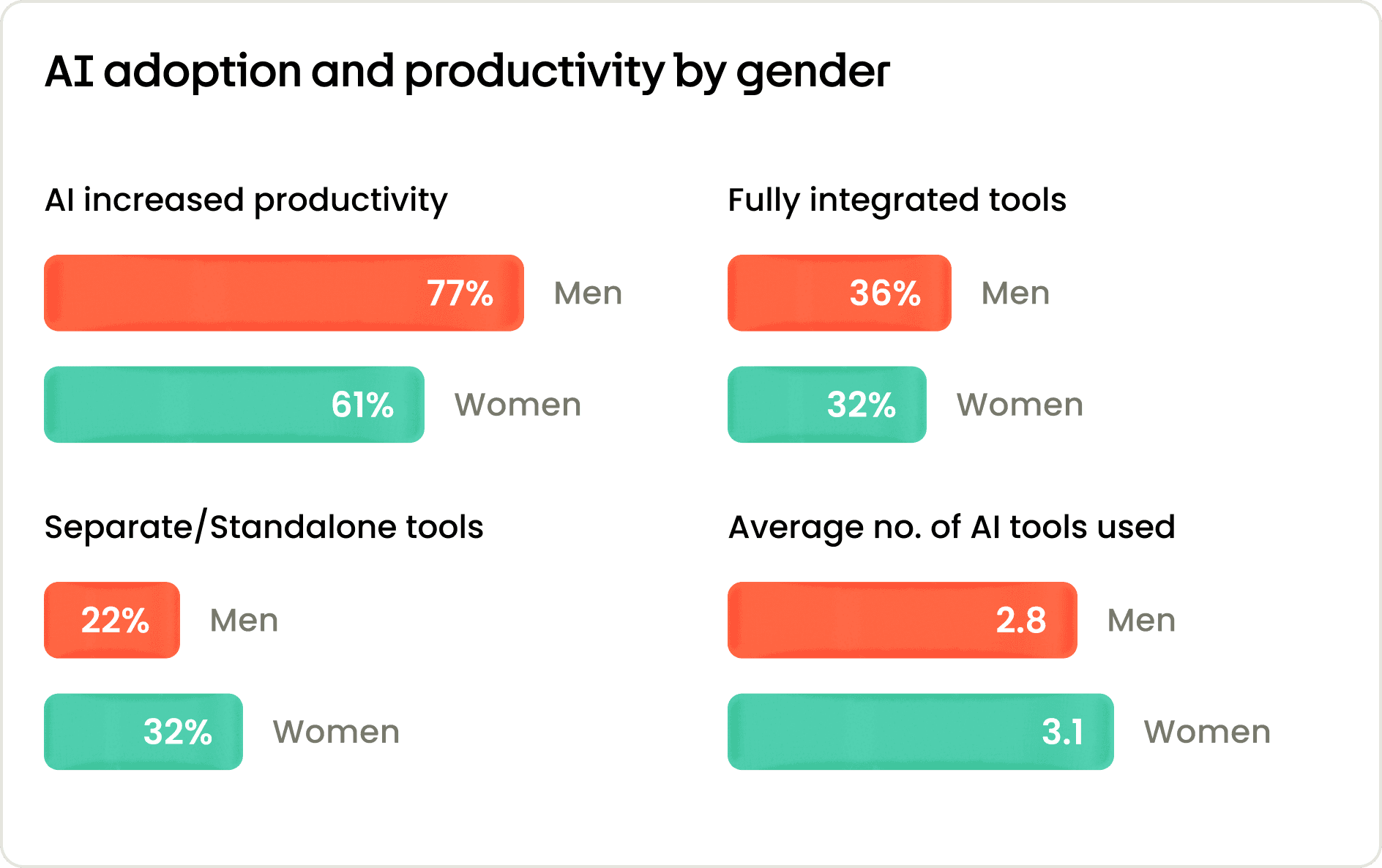
Women and men are both adopting AI at broadly similar rates, but men report AI has improved their productivity more.
The gap is not driven by resistance or distrust, fewer than 1 in 10 of either group holds negative views of AI. This is a structural gap. Women use more tools on average (3.1 vs 2.8) and are far more likely to be running standalone AI tools. Men on the other hand seem to have adopted more integrated tools, and as such, fewer tools on average.
Senior workers are more likely to experience gains
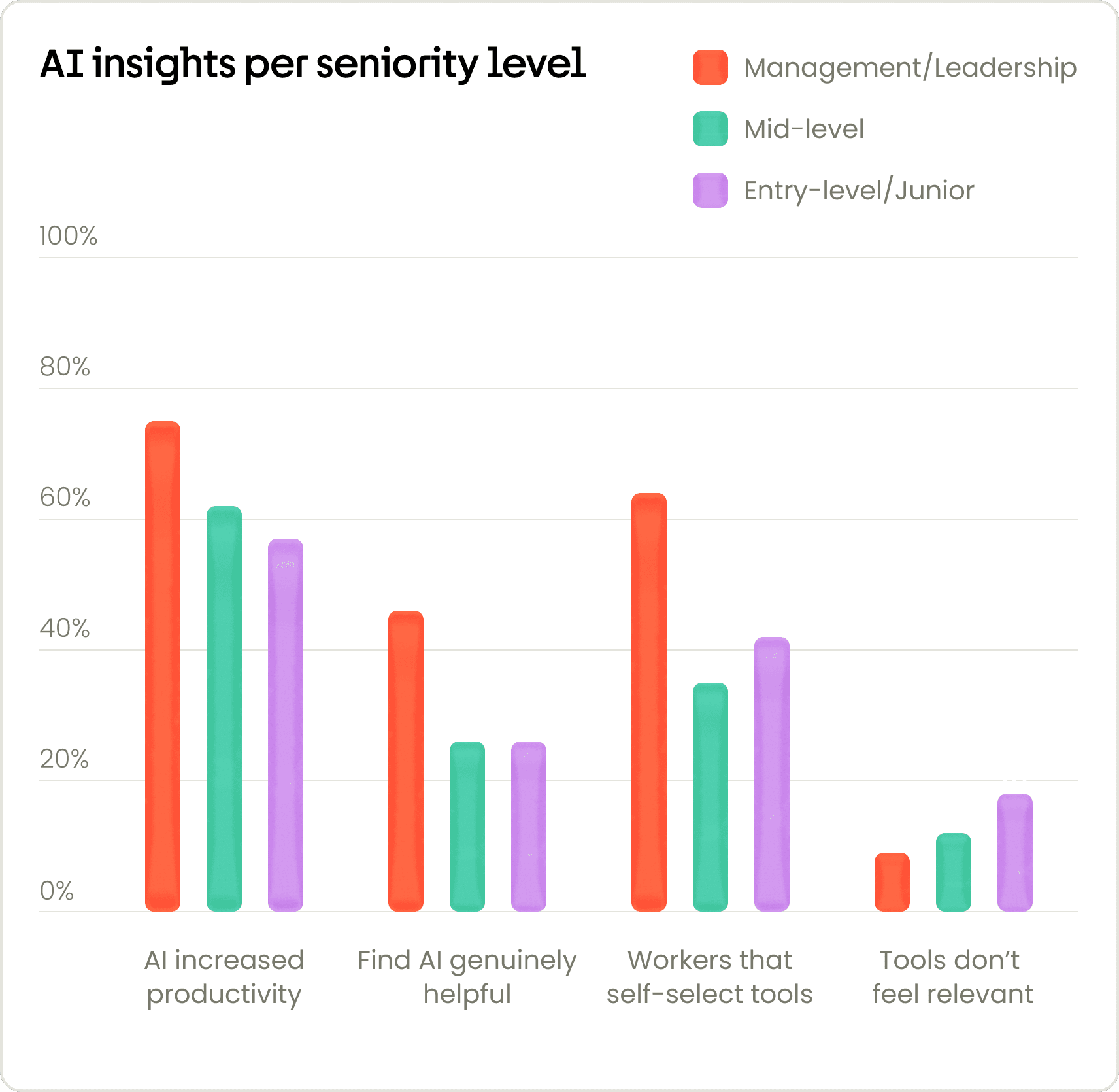
Another productivity gap is emerging between senior and junior workers. Senior management and leadership level roles are experiencing a 75% productivity increase compared to only 57% for entry-level workers. Senior workers also report that they find AI more helpful and more feel that AI has had a transformative impact on the work they do.
Again, this may come back to experience level—managerial roles are able to feel the impacts more compared to how their work was done prior to AI. It could also be down to the fact that senior roles are more likely to choose their own AI tools, rather than use top-down mandates.
The Fix
How to drive real AI transformation within your organization.
Closing the AI productivity gap
Our data confirms it’s time to rethink how we approach AI tools. Adoption is no longer the biggest challenge, workers are using more AI than ever before. AI tools don’t always reduce workload and some even create additional admin.
Integrated AI tools, embedded into original workflows are what’s differentiating the AI winners. The AI Superworkers, who report that AI has improved their productivity by 87%, are the only group genuinely transforming the work they’re doing, through adoption of integrated tools.
Out of the workforce who’ve adopted AI, AI Superworkers now make up 25%, and they aren’t just an arbitrary group. They’re an employee profile which is replicable and the key to closing the estimated $2.6 trillion unrealized productivity gap.
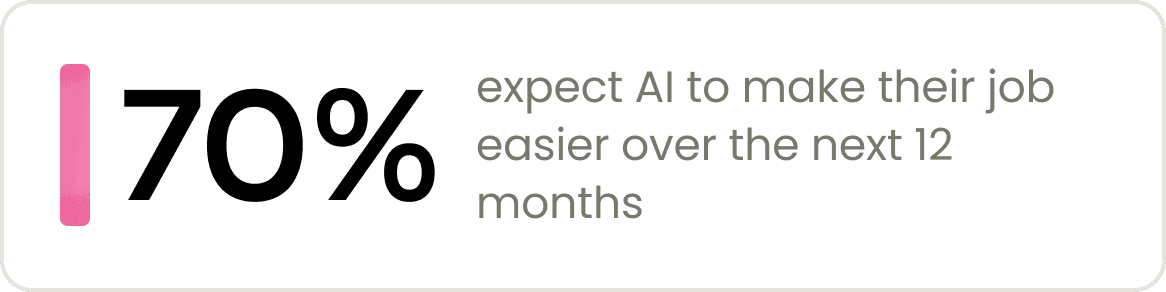
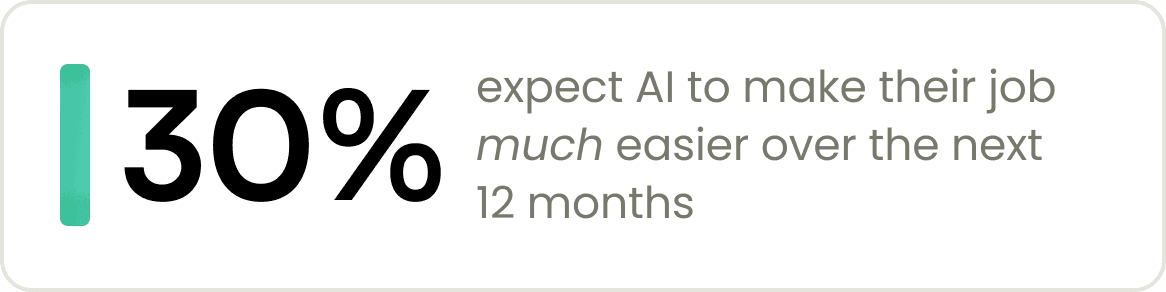
The US workforce is genuinely optimistic about where AI is taking them—they want tools to be implemented. 70% expect AI to make their job easier in the next 12 months and 30% expect it to make their job much easier. Even among groups currently falling behind, the prevailing mood is anticipation, not resistance.
The opportunity this creates is significant. The gap between current experience and expectation can be closed with better integration, tool section and support.
Three actions to drive change
Embed AI into existing workflows
Integrated tools outperform standalone tools by a big margin. This is the new frontier for AI implementation. If employers want to transform work, they must embed integrated tools at the operational layer of existing workflows.
Choose tools that incorporate context
AI is generating a new category of admin. The key here is workflow context. AI tools must have visibility across all aspects of an employees’ workflow to produce accurate outputs that reduce the need for reviewing and task switching.
Let teams choose their own tools
Self-selection drives better outcomes. Workers who choose their own tools integrate them more deeply and are more likely to feel long-term benefits. Educating workers about the benefits of integrated tools is recommended to drive adoption.
Methodology
About this research
This report is built from primary data collected for Fyxer by OnePoll, an independent market research company. OnePoll surveyed 2,000 US office workers.
To test whether the integration/productivity relationship holds independently of confounding variables, Fyxer conducted an OLS regression with productivity increase as the dependent variable. Independent variables included: integration level, number of tools, self-selection, seniority, generation, and gender. Integration level remained a significant independent predictor of productivity outcomes (p<0.01) after controlling for all other variables. The relationship between integration and productivity is not explained by seniority, generation or gender alone.
$2.6 trillion calculation
93M US office workers × 88% AI users × 75% non-superworkers = 61 million workers
Full integration gap = 63pp (82% vs 20% productivity)
Average US salary = ~$68,766
61M × $68,766 × 63pp = $2.6 trillion
Per worker: $41,540
The salary assumption ($69K) is based on average US office worker salary from BLS data. This is an estimate and indicative of the costs potentially being unrealized with current AI rollout. It echoes McKinsey's estimates which put the global generative AI opportunity at $2.6–4.4 trillion, making the US-only integration gap figure proportionate.
About Fyxer
Fyxer is the email assistant that organizes your inbox, writes draft replies and takes actionable meeting notes, embedded directly into Gmail and Outlook. Fyxer processed 1.4 billion emails in 2025 and saves users an average of one hour a day on avoidable inbox admin.
This is the second iteration of the Fyxer Admin Burden Index research. The first report surveyed 5,000 UK and US office workers in December 2025.
Press enquiries: press@fyxer.com