
AI Productivity Trap: Real Estate Briefing
An industry poised for AI transformation, yet to adopt the tools to unlock it. Original research commissioned by Fyxer.
Fyxer Research Team • July 2026
Executive Summary
Solving the high adoption, low impact puzzle
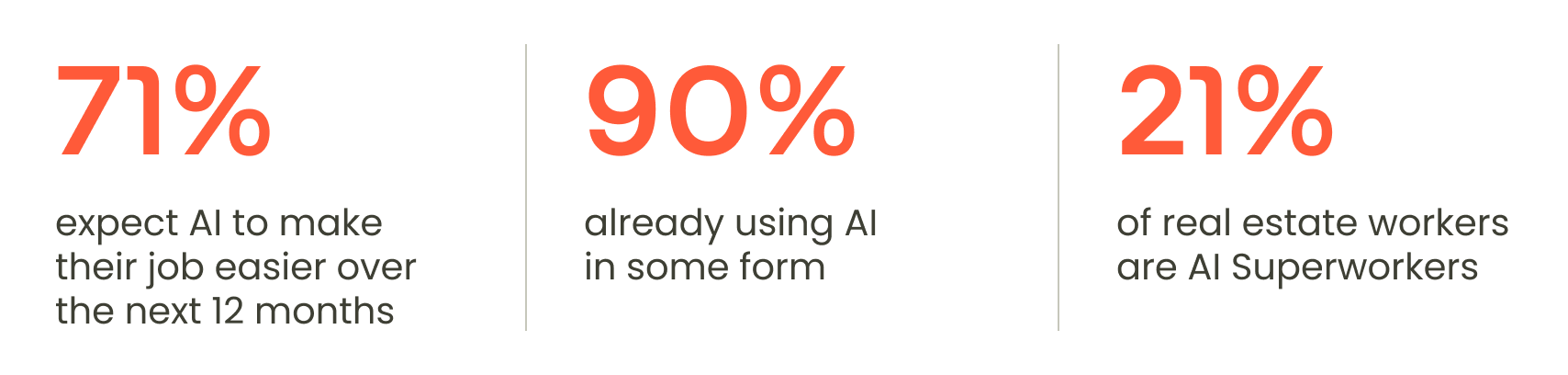
With a workload dominated by admin and client communication, the real estate industry is ripe for AI productivity gains. AI adoption across the sector is essentially universal; 90% of our respondents reported using AI in some form, and according to Delta Media, 97% of brokerage leaders say that their agents are now using AI.
Despite this, a staggering value gap appears to have emerged. Only 35% of real estate professionals we surveyed say that AI is genuinely helpful. They also reported experiencing high volumes of AI re-do, losing more time per week to reviewing and editing AI outputs than our main sample findings.
However there are indications within this data that mirror the main findings of our AI Productivity Trap Report; that integrated AI tools are the key to driving AI transformation. Real estate is currently lagging behind on integrated tool adoption and uptake of sector-specific or specialized AI tools is low, with AI use concentrated around generic generative AI.
Emerging is a picture of an industry poised for transformation, but yet to adopt the tools that will unlock it.
Top findings:
- AI adoption in real estate is near universal at 90%, but only 35% find AI genuinely helpful, revealing a huge gap between use and value delivered.
- Real estate professionals are using mostly generic, generative AI tools, with low uptake (21-25%) of sector-specific or specialized AI.
- 21% of those surveyed say AI has transformed their work, indicating that the ‘AI Superworker’ profile is also emerging within the real estate sector.
Sample notes:
- This briefing covers 89 respondents identified as working in real estate. See methodology for more information.
- ‘Main sample findings’ relate to the 2000 US office workers surveyed in the AI Productivity Trap Report. Also referred to within this report as ‘US office workers’.
AI tool use in real estate
Real estate is uniquely positioned for AI optimization
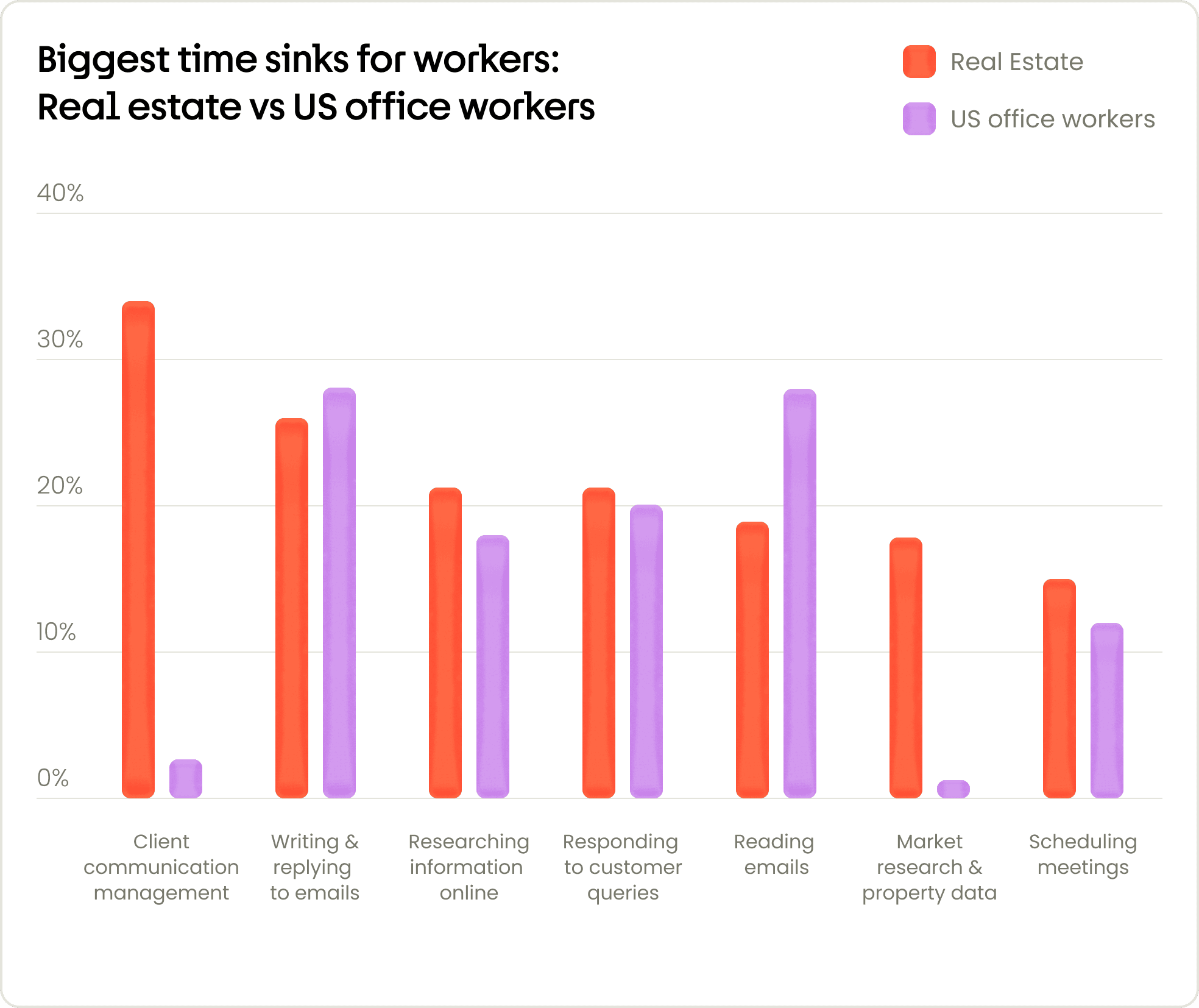
Real estate is one of the most admin-burdened sectors, operating document-intensive, communication-heavy workloads. Time spent managing client communication is 32 percentage points higher than the cross-sector average.
All three areas, client communication, emails and research, all have specialized AI tools; with each being able to be completely transformed by the adoption of the right AI solutions. Morgan Stanley estimates AI could deliver $34 billion in efficiency gains across the sector by 2030.
Sector-specific AI tool uptake is low
Real estate has sector-specific and specialized AI tools that
are purpose-built for agent workflows, but the majority aren’t using them.
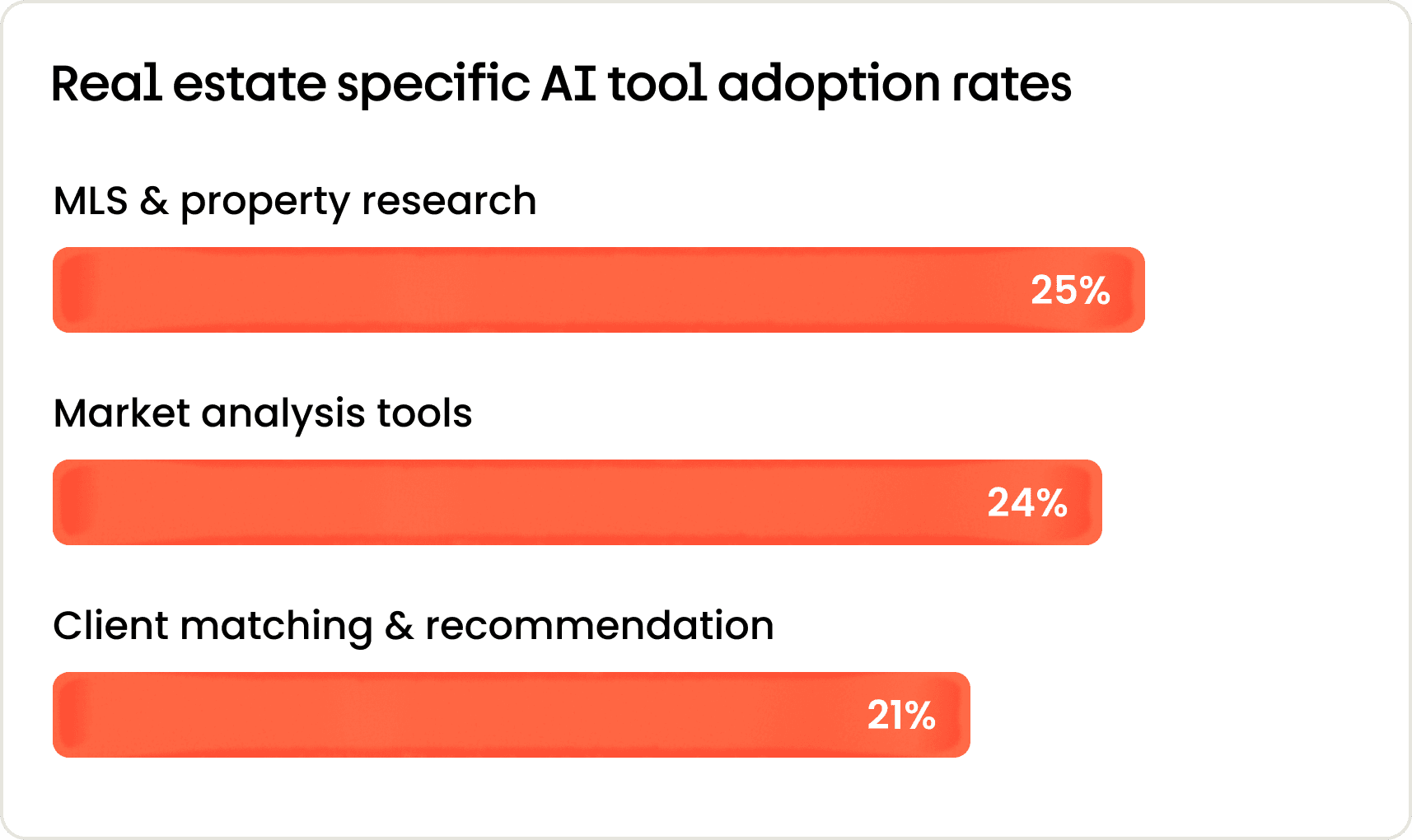
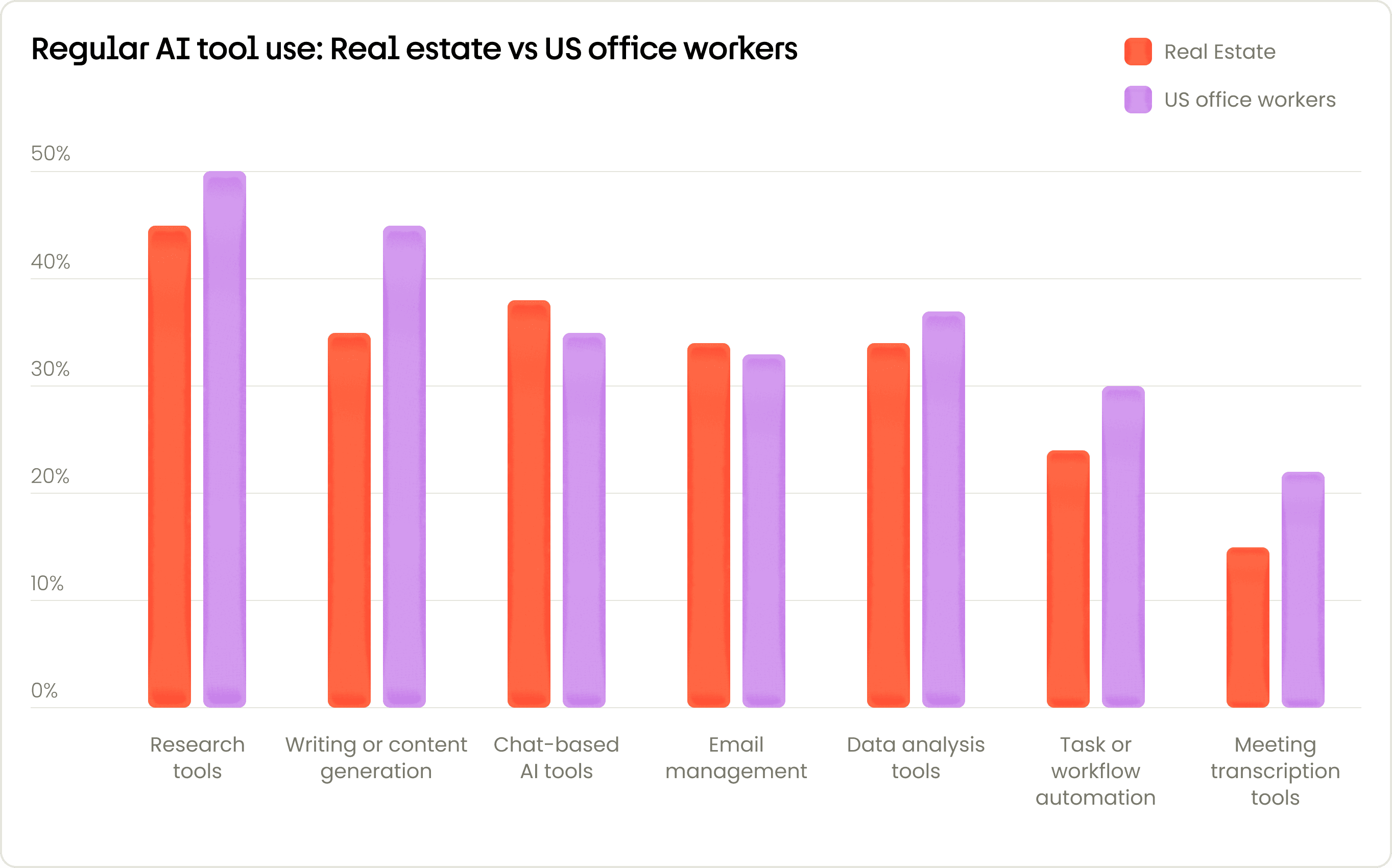
Across the three core sector-specific categories (MLS and property research, market analysis, client matching and recommendation systems) adoption sits between 21% and 25%. The majority of agents we surveyed are instead relying on generic AI; chat tools and general research assistants coming up top. Real estate professionals lag behind US office workers on regular AI use of almost every tool type, apart from chat tools.
This is a picture of an industry that has adopted AI at the surface level, reaching for the most accessible tools rather than the most appropriate ones. Generic AI can draft an email, but it won’t have an inherent understanding of agent specific property data, client context or transaction workflows.
AI Challenges in Real Estate
Agents aren't finding value in AI tools
90% of real estate professionals now use AI, but only 35% find it genuinely helpful. This is a stark gap between tools deployed and value delivered—the largest out of all of the industries analyzed by Fyxer’s AI Productivity Trap Report, at 55 percentage points.
Real estate professionals were also the most likely to state that the AI tools they have aren’t relevant to their role, at 11%. One in five are running AI tools completely separately from their main workflow, rather than using partially or fully integrated AI tools, embedded at the workflow level.
AI adoption within real estate is not a constraint. It’s that agents aren’t using them to meaningfully change how they work.
.png&w=3840&q=75)
Real estate workers are experiencing high volumes of 'AI re-do'
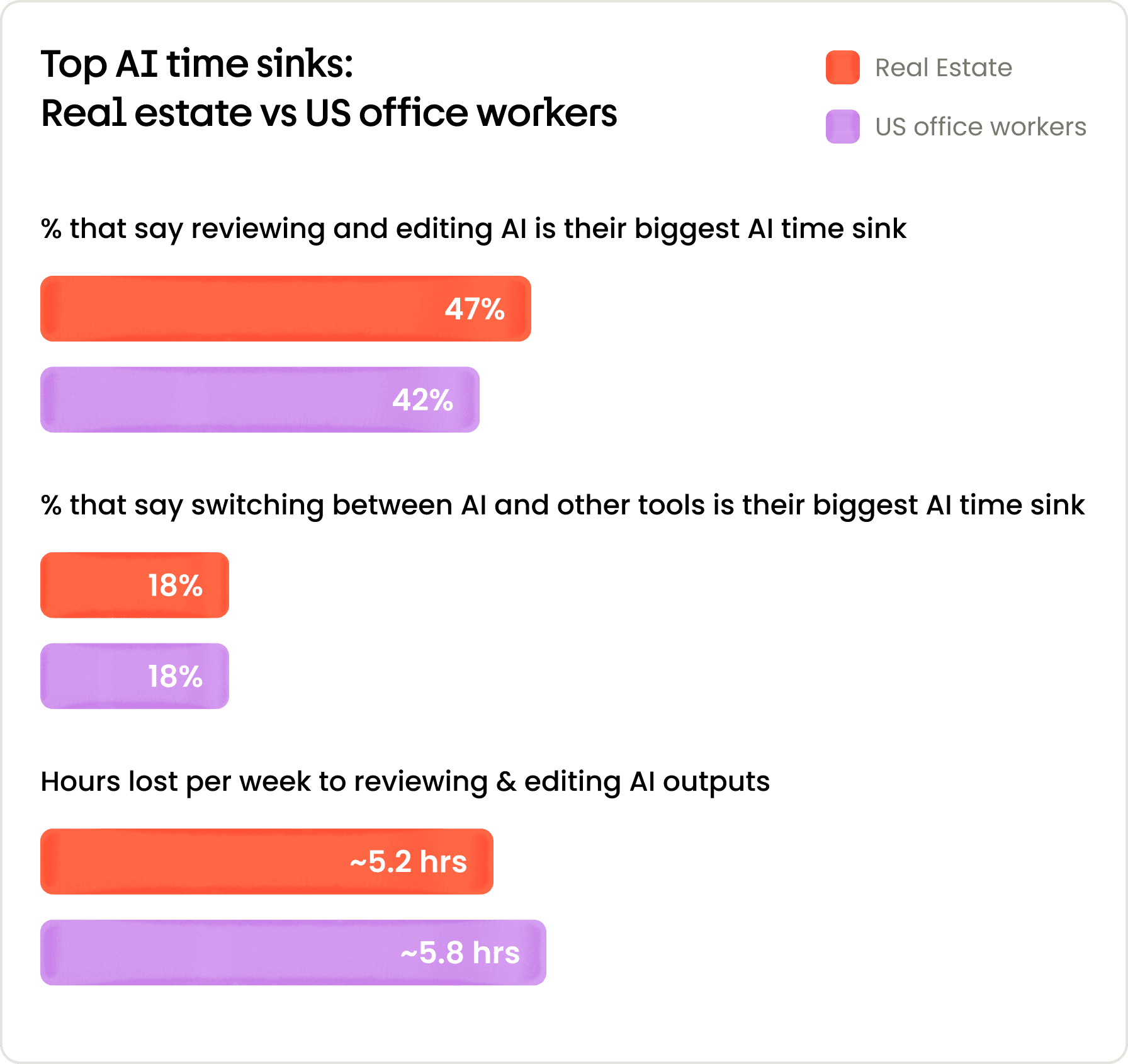
‘AI re-do’ relates to the additional work AI is creating—time spent having to edit, fact-check and rework AI outputs. 47% of real estate workers reported that reviewing AI outputs for accuracy, were their biggest AI time sink. 5.2 percentage points more than our main sample findings.
In an industry built on relationships, every client communication, document and market analysis carries a personal reputation risk. This data exposes the inadequacy of generic tools, with AI outputs still needing significant human judgment before they’re client-ready.
Email remains a significant admin challenge
Email presents a huge untapped opportunity within the real estate sector, reported as the second biggest time sink after client communication management. Yet only 39% of real estate professionals are using AI to write
or reply to emails, and only 23% are using AI to read emails.
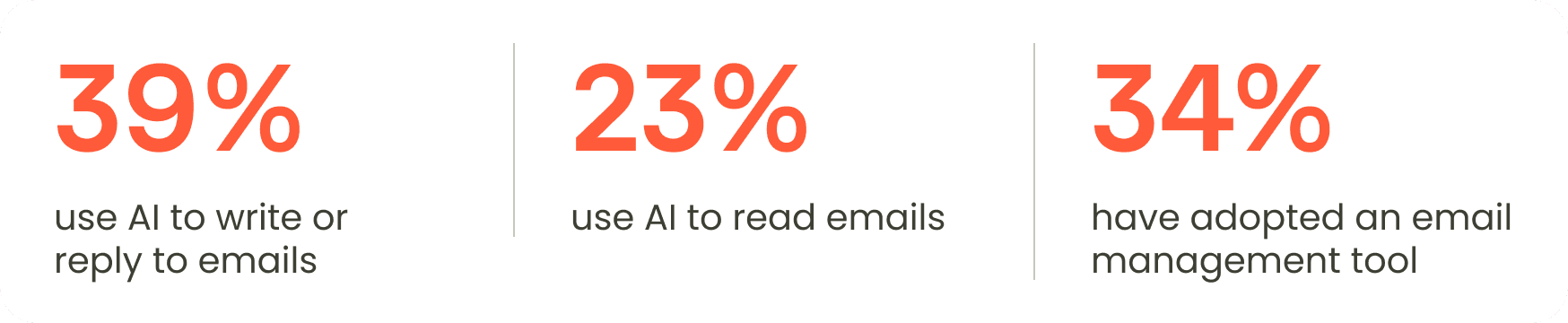
Although this is slightly higher than our main sample findings, for an industry built on the inbox, AI tool adoption for email is low; signalling a significant opportunity for automation and AI optimization across day-to-day tasks.
Integration promises change
How integration might be able to close the value gap
Fyxer’s 2026 AI Productivity Trap Report found that US office workers using fully integrated AI tools are 63 percentage points more productive than those using standalone tools. Integrated tools appear to hold the key to true AI transformation.
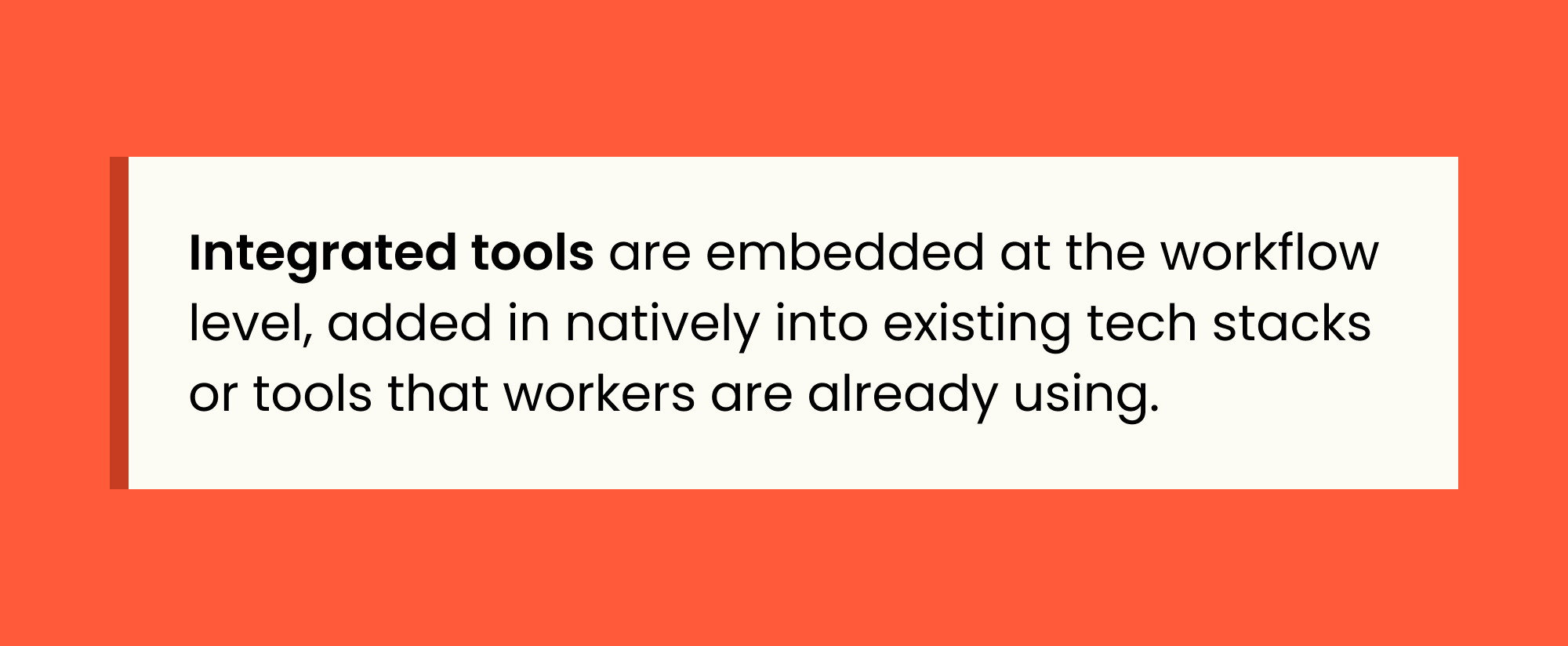
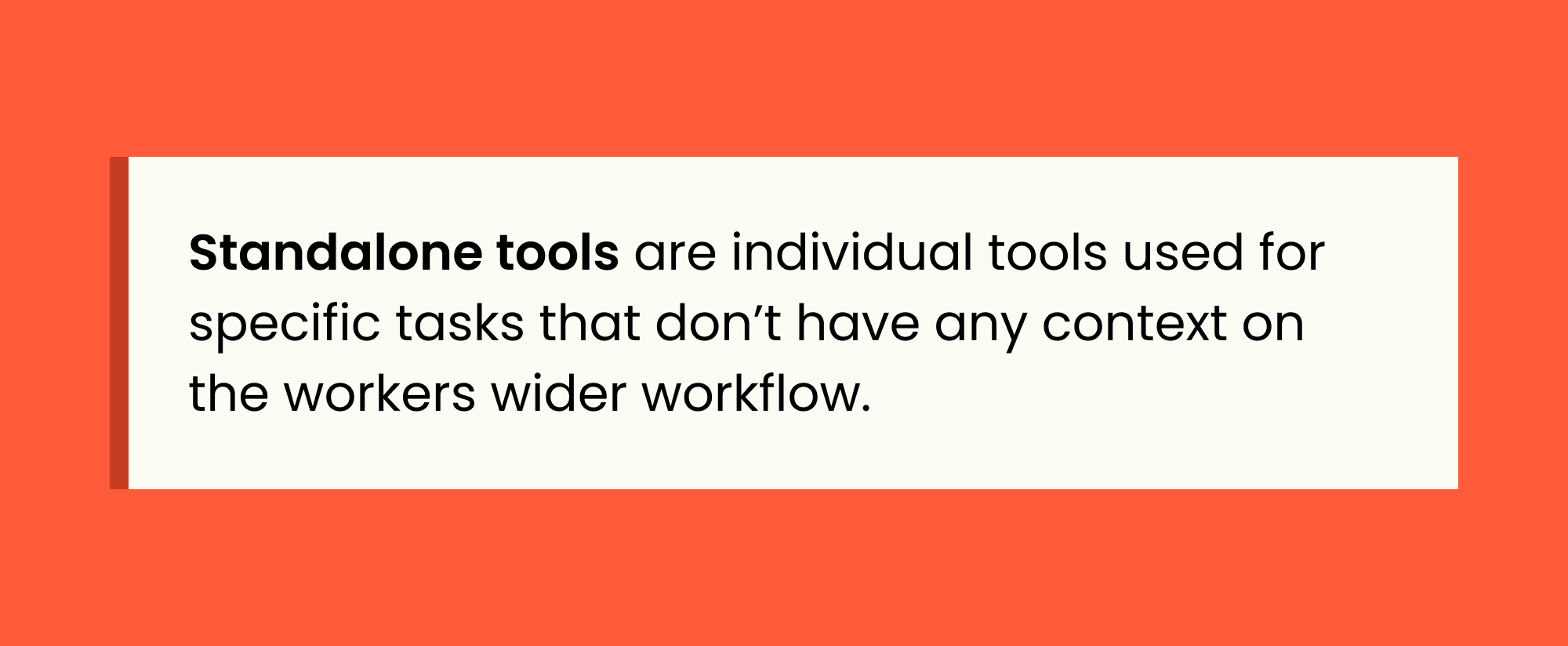
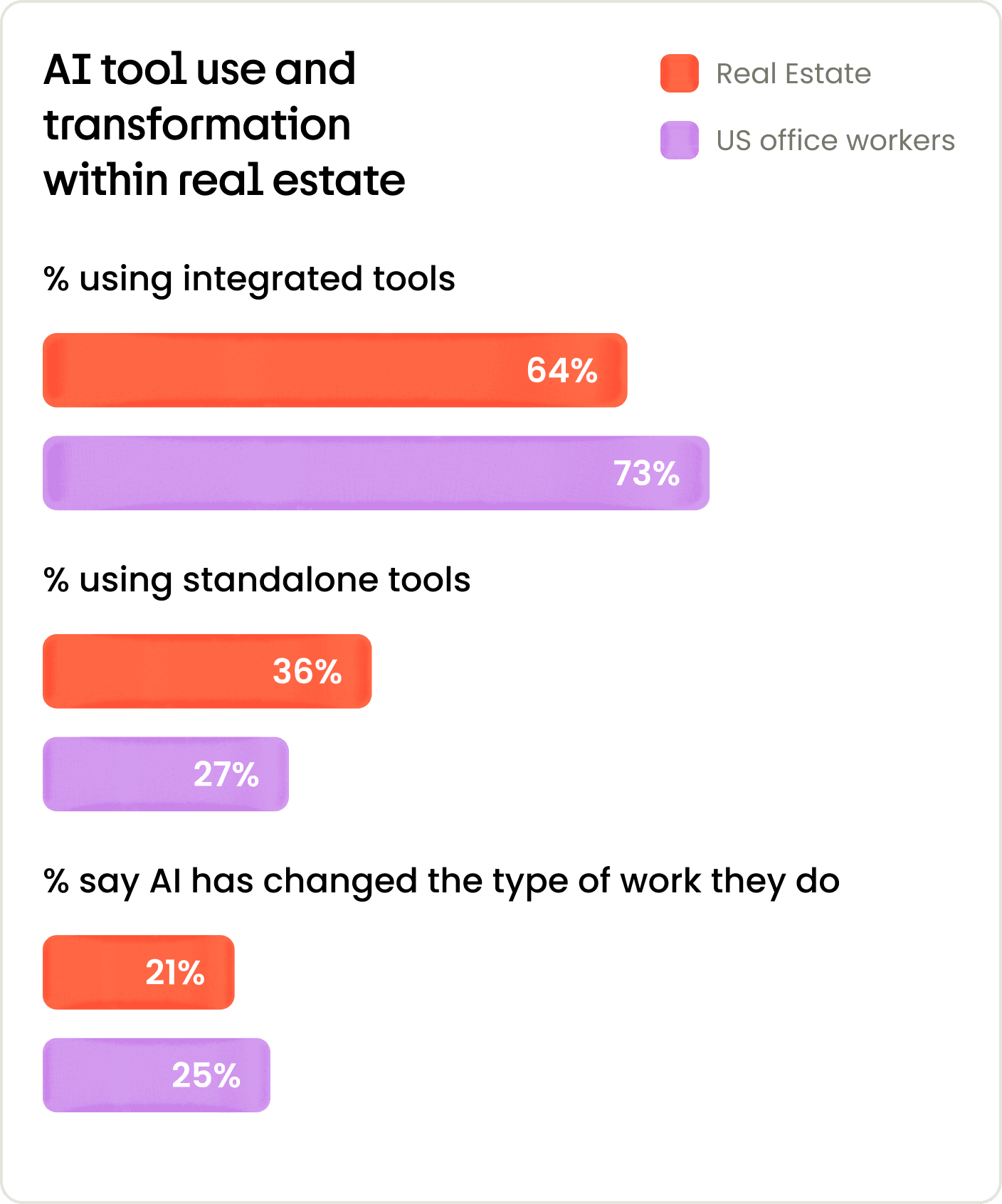
Real estate is lagging behind on integrated tool adoption at 64%, when compared to the main sample findings at 73%. Standalone tool use is also up at 36%, compared to 27%.
Integrated tools built for real estate can connect to MLS data, be trained on
market context and be embedded into communication workflows. They can reduce the AI-redo burden by generating outputs that are already contextually appropriate. Lagging behind with integrated tool use could also be contributing to the real estate value gap.
The AI Superworker may be taking shape
The ‘AI Superworkers’ make up 25% of all US AI-users. They’re the only AI users who’ve transformed the type of work they’re doing with AI. 87% of Superworkers say that AI has increased their productivity, compared to just 63% of non-Superworkers.
Although the sample size is small and therefore should be treated as directional data only, within real estate, our data suggests that the AI Superworker could also be emerging. 21% of agents report that AI has transformed their work; a small but promising minority.
Who are AI Superworkers?
Our AI Productivity Trap Report found that there were 3 key steps to the AI Superworker’s success:
- They use fully integrated tools at a high rate (62%)
- They self-select their own tools at a high rate (67%)
- They cover their entire workflow, with AI present at every stage for every task
The fix: Actions to drive change
Closing the real estate productivity gap
The adoption lag in real estate is solved.
9 in 10 professionals are now using AI in some form and nearly three quarters believe AI will make their job easier over the next 12 months. The issue is a gaping value gap, with only a third of real estate professionals reporting that they find AI genuinely helpful.
But a promising path forward is visible in the data. Integrated tools drive higher productivity, AI transformation rates and value perceptions—which are currently being underutilized within this sector, alongside highly specialized sector-specific AI tools.
21% of real estate professionals also report that AI is genuinely transforming the work that they do. These ‘AI Superworkers’ are demonstrating what is possible when the right AI tools are adopted and embedded into workflows.
More data is needed on the real estate specific Superworker, but the fact that this group is present means that there is a repeatable real estate employee profile, currently unlocking true AI transformation.
Three actions to drive change
Switch from generic to sector-specific tools
Sector-specific AI and specialized tools that have an embedded understanding of MLS data, client context and previous communication threads are currently being underutilized. Switching to tools that are purpose-built for agent workflows could drive meaningful productivity gains and help close the value gap.
Trial more integrated AI tools
In our cross-sector analysis, tools integrated at the workflow level are driving significantly higher productivity and task transformation rates. Results within real estate suggest a similar emerging pattern.
Start with client communications
This is the biggest time drain in real estate. Optimizing email is the lowest friction starting point for those not yet using integrated tools and the one with some of the biggest proven returns.
Methodology
About this research
This report is built from primary data collected for Fyxer by OnePoll, an independent market research company. OnePoll surveyed 2,000 US office workers. This report covers 89 respondents identified as working in the real estate sector. Data on integrated and standalone tool use should be treated as directional rather than statistically definitive, due to small sample sizes of 51 and 29 respondents respectively. AI Superworkers within real estate is based on a sub-sample of 17 respondents. Patterns are consistent with the broader cross-sector average dataset and should be quoted in that context.
Causation note
Fyxer conducted an OLS regression with productivity increase (Q14a) as the dependent variable. Independent variables included integration level (Q11), number of tools (Q10), self-selection (Q16), seniority, generation, and gender. Integration level remained a significant independent predictor of productivity outcomes (p<0.01) after controlling for all other variables. A separate regression confirmed integration independently predicts stress outcomes in both directions (p<0.01), with seniority not significant in either model.
About Fyxer
Fyxer is the email assistant that organizes your inbox, writes draft replies and takes actionable meeting notes, embedded directly into Gmail and Outlook. Fyxer processed 1.4 billion emails in 2025 and saves users an average of one hour a day on avoidable inbox admin.
This report is part of the Fyxer AI Productivity Gap Report series.
Press enquiries: press@fyxer.com