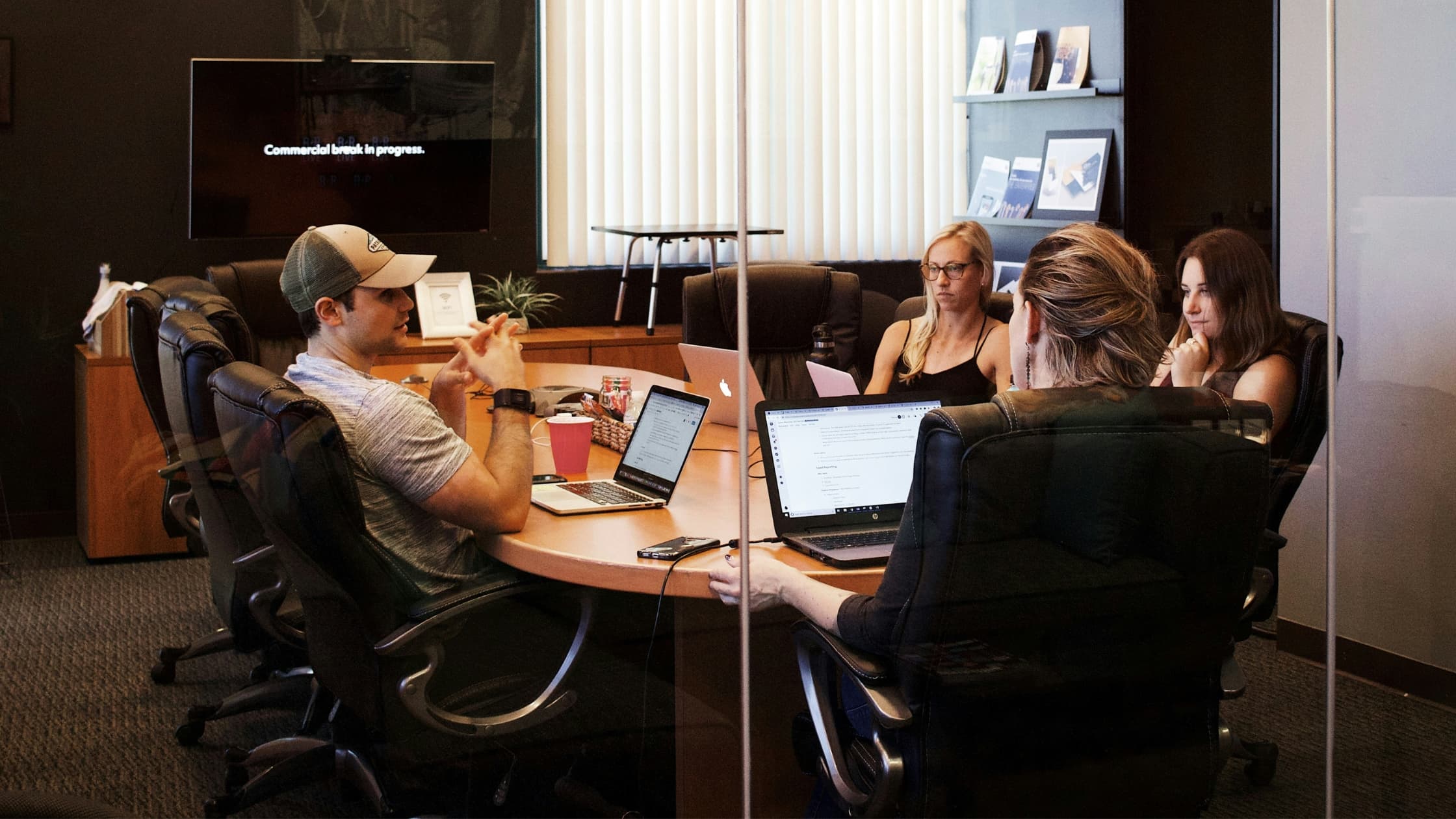
An HR meeting notes template is a structured record used to document what was discussed, decided, and agreed in formal and informal HR conversations. It typically captures the meeting type, attendees, a summary of discussion, employee response, formal outcomes, and any actions agreed. The template below works across performance reviews, disciplinary hearings, onboarding conversations, and welfare check-ins.
For an HR manager handling a formal disciplinary case, a performance review with a warning attached, or a welfare conversation that may inform a reasonable adjustments decision, meeting notes are not administrative housekeeping. All of these produce records that may need to be referenced weeks or months later, in contexts where accuracy and completeness matter a great deal.
This template is designed to work across the full range of HR meetings, from routine check-ins to formal capability hearings. Below you'll find the core template, followed by specific guidance for the meeting types where documentation requirements are highest: performance reviews, disciplinary meetings, onboarding conversations, and welfare check-ins.
Editable HR meeting notes templates
HR meeting notes are only as useful as the structure behind them. The templates below are designed to be copied and adapted for each meeting type, with field-by-field prompts to ensure nothing critical gets left out. Use them as a starting point and adjust the level of detail to match the formality of the conversation.
1. General HR meeting notes template
The template below covers the full range of HR conversations, from routine check-ins to formal hearings. Every field is a prompt, not optional padding. The meeting type field matters because it determines what else in the template is required: a disciplinary meeting without a documented employee response is an incomplete record; an onboarding conversation without a note on probation terms is a gap that may surface later. Fill in everything relevant to the meeting in front of you and leave nothing substantive undocumented.
HR teams that move fast need an inbox that keeps up
Fyxer organizes your emails by priority and writes draft replies in your tone, so you can get follow-up communications out to employees quickly after every meeting
Meeting details: Date: Start time / End time: Location / platform: Meeting type: [Performance review / Disciplinary / Onboarding / Welfare check / Return to work / Exit interview / Other]
HR representative: Line manager present: Employee name and role: Other attendees: [Union rep / Witness / Other, and their role]
Was employee informed notes would be taken? [Yes / No] Was employee offered the right to be accompanied? [Yes / No / Not applicable]
Purpose of meeting: [One to three sentences describing why this meeting was called and what outcome was sought]
Summary of discussion: [Key points raised, in order. Note who raised what where relevant. In formal meetings, note who introduced each piece of evidence or raised each concern.]
Employee response: [Summary of how the employee responded to what was raised. This section is required for disciplinary and performance meetings. Be factual and specific.]
Decisions / outcomes: [Decision or formal outcome] — [Agreed or issued by whom]
Actions agreed: [Action] — [Owner] — [Deadline]
Documents shared or signed: [Document name] — [Status: shared / signed / to follow]
Follow-up meeting required: Yes / No — [Proposed date and purpose, if yes]
Notes taken by: Name and role: Date notes completed: Shared with employee on:
2. Performance review meeting notes
Performance review notes need to be specific enough to be useful at the next review. A goal recorded as 'improve client communication' is difficult to assess six months later. The same goal recorded as 'respond to client emails within 24 hours and send project update summaries to clients fortnightly' gives everyone a clear reference point.
Note what was acknowledged as going well, not only the areas for development. One-sided HR records create a skewed picture of an employee's tenure and can become a problem if the employee later challenges a decision. A complete record, including what the employee did well in the period under review, is also better for the employee: it gives them something concrete to take into their next role or into a salary conversation.
Be specific about timelines for goals and development actions. 'By the end of Q3' is better than 'soon.' 'By the next review' creates ambiguity if the next review gets moved. Use dates where possible.
If there's a formal rating scale involved, record the rationale behind the rating, not just the rating itself. 'Meets expectations' with no explanation attached isn't a useful record. 'Meets expectations: delivered all three project milestones on time, client feedback was consistently positive, one instance of escalation that was well-managed' gives a real picture of the period.
Meeting details: Date: Start time / End time: Location / platform:
Reviewer name and role: Employee name and role:
Review period covered: [e.g., Q1 2026 / January — March 2026] Rating scale used: [If applicable — note the scale and what each level means]
Was the employee given advance notice of the review? [Yes / No]
Was the employee provided with any self-assessment form in advance? [Yes / No / Not applicable]
Performance summary: [Overview of the employee's performance against the agreed goals or objectives for the review period. Note what was delivered, what wasn't, and what was specifically acknowledged as a strength.]
Goals review: [Goal 1] — [Outcome: Met / Partially met / Not met] — [Notes on evidence or context] [Goal 2] — [Outcome] — [Notes] [Add rows as needed]
Formal rating (if applicable): Rating given: [e.g., Meets expectations / Exceeds expectations] Rationale: [Specific evidence that informed this rating — do not leave blank]
Areas of strength: [Specific examples of what the employee did well in the period. This section is required — do not omit.]
Areas for development: [Specific gaps, with examples where possible. Avoid vague language like "needs to improve communication." Be concrete.]
Goals for next review period: [Goal] — [Success measure] — [Deadline] [Goal] — [Success measure] — [Deadline]
Development actions agreed: [Action] — [Owner] — [Deadline]
Salary or compensation discussion: [Note whether salary was discussed. If a decision was communicated, record the exact terms and effective date. If no change, record this explicitly.]
Employee comments: [Summary of any comments the employee made on the review, including any areas they disagreed with. Do not paraphrase in a way that softens disagreement.]
Follow-up meeting required: Yes / No — [Proposed date and purpose, if yes]
Notes taken by: Name and role: Date notes completed: Shared with employee on:
3. Disciplinary meeting notes
Disciplinary meeting documentation is the most consequential category in HR. These notes may be reviewed by employment lawyers, employment tribunals, or HR directors as part of an appeal process. The standard for accuracy and objectivity is high.
Start with the specific conduct or performance issue that triggered the meeting. Be precise: dates, incidents, policy references. Then record what evidence was presented, including any documents shared, and the employee's response to each point. Don't paraphrase the employee's response in a way that softens or sharpens it. Record what they said as closely as possible.
Avoid editorial language. 'The employee stated they were unaware of the policy' is a factual note. 'The employee seemed confused and defensive' is an interpretation. 'The employee appeared not to understand the seriousness of the situation' is an opinion. In a disciplinary record, opinions and interpretations are a liability. Stick to what was said and what happened.
If a formal outcome was issued, whether a first written warning, a final written warning, a performance improvement plan, or a dismissal, record the exact wording of the outcome. Don't paraphrase it. Also record whether the employee was informed of their right to appeal, and by what date any appeal must be submitted.
After the meeting, share the notes with the employee and ask them to confirm that the record is accurate. If they disagree with any part, note their disagreement alongside your own record rather than amending your version. Both the company's record and the employee's position should be visible in the documentation.
Meeting details: Date: Start time / End time: Location / platform:
HR representative: Conducting manager name and role: Note-taker name and role: [Must be different from the conducting manager] Employee name and role: Employee representative present: [Union rep / Colleague / None] — [Name and role if present]
Was the employee informed of the allegations in writing before the meeting? [Yes / No — if yes, note the date of the written notice] Was the employee informed of their right to be accompanied? [Yes / No]
Nature of the allegation or conduct issue: [Describe the specific conduct or performance issue being addressed. Include dates, incidents, and any relevant policy references. Be precise — avoid general characterizations.]
Evidence presented: [Document or evidence] — [Presented by whom] — [Employee's response to this item] [Document or evidence] — [Presented by whom] — [Employee's response to this item]
Employee's response to the allegations: [Record what the employee said in response to each allegation. Record their words as closely as possible. Do not editorialize or interpret. "The employee stated they were unaware of the policy" is correct. "The employee seemed defensive" is not.]
Mitigating factors raised: [Any mitigating circumstances the employee or their representative raised. Record these whether or not they affect the outcome.]
Formal outcome: [Record the exact wording of the outcome: e.g., First written warning / Final written warning / Performance improvement plan / Dismissal. Do not paraphrase.] Issued by: [Name and role] Effective from: Duration (if applicable): [e.g., Warning remains on file for 12 months]
Right of appeal: Was the employee informed of their right to appeal? [Yes / No] Appeal deadline: [Date] Appeal submitted to: [Name / role / process]
Documents shared or signed: [Document name] — [Status: shared / signed / to follow]
Notes taken by: Name and role: Date notes completed: Shared with employee on: Employee confirmed receipt: [Yes / No / Pending] Employee's written response to notes (if any): [Attach or summarize below]
4. Onboarding meeting notes
Onboarding conversations are often informal and wide-ranging, which is exactly why they get skipped in the documentation. A lot is communicated in the first few weeks: system access, role expectations, team structure, probation targets, escalation paths, benefits details. Three months later, when something turns out to have been unclear or when an expectation isn't being met, the first question is always what was communicated at the start.
Onboarding notes don't need to be lengthy. A checklist of topics covered, with a brief note against each confirming what was communicated and whether any follow-up is needed, is usually sufficient. For each topic, note whether it was covered verbally, whether supporting documentation was shared, and whether the employee had questions.
Topics worth capturing explicitly: role responsibilities and where they sit relative to the job description, probation length and what successful completion looks like, who the employee reports to and who to go to for different types of support, system access status, and any training or onboarding milestones agreed.
If the onboarding conversation includes any discussion of salary, benefits, or employment terms that differ from the offer letter, document these carefully. Discrepancies between what's in writing and what's communicated verbally are a source of genuine disputes. The same applies if a flexible working arrangement is discussed informally during onboarding — capture it before it becomes a misunderstanding.
Meeting details: Date: Location / platform: HR representative / hiring manager: Employee name and role: Start date: Probation end date:
Topics covered: Role responsibilities — [Covered: Yes / No] — [Notes: e.g., verbal summary provided / job description shared] Probation length and success criteria — [Covered: Yes / No] — [Notes: e.g., specific milestones communicated] Reporting structure — [Covered: Yes / No] — [Notes] Team structure and key contacts — [Covered: Yes / No] — [Notes] System access status — [Covered: Yes / No] — [Notes: e.g., confirmed active / IT ticket raised] Training or onboarding milestones — [Covered: Yes / No] — [Notes and deadlines] Benefits and compensation terms — [Covered: Yes / No] — [Notes: flag any verbal communication that differs from the offer letter] Working arrangements — [Covered: Yes / No] — [Notes: note any flexible or hybrid arrangements discussed here, even informally] Escalation paths and support contacts — [Covered: Yes / No] — [Notes] Company policies (HR, conduct, data, etc.) — [Covered: Yes / No] — [Documentation shared: Yes / No]
Follow-up check-in scheduled: Yes / No — [Date and format]
Notes taken by: Name and role: Date notes completed: Shared with employee on:
5. Welfare check-in and return-to-work meeting notes
Welfare check-ins and return-to-work conversations after absence sit in the most sensitive category of HR documentation. The employee may be discussing health issues, personal circumstances, or difficulties at work. The notes need to balance thoroughness with sensitivity.
Document what support was discussed and offered. If reasonable adjustments were mentioned, record them specifically: what was proposed, what was agreed, and what the review timeline is. If an occupational health referral was discussed, note whether this was agreed and who is responsible for arranging it.
One thing to be careful about: don't document health information beyond what's directly relevant to the support being offered. The reason for an absence may be relevant; detailed medical history usually isn't, unless the employee has specifically shared it and consented to it being recorded. When in doubt, keep the notes focused on what was agreed and what support is in place, rather than the underlying circumstances.
Meeting details: Date: Location / platform: HR representative: Line manager present: [Yes / No] Employee name and role: Meeting type: [Welfare check-in / Return to work / Both]
If return to work — date of return: If return to work — duration of absence:
Reason for absence recorded (if shared by employee and consented to be recorded): [Record only what the employee has specifically shared and agreed to have documented. Do not record detailed medical history.]
Wellbeing discussion: [Summary of how the employee described their current wellbeing. Record what was said, not your interpretation of it. Keep this section brief and factual.]
Occupational health referral: Discussed: [Yes / No] Agreed: [Yes / No] Responsible for arranging: [Name / role]
Work situation discussed: [Any workload, team, or workplace factors the employee raised as relevant to their wellbeing. Record factually.]
Actions agreed: [Action] — [Owner] — [Deadline]
Follow-up meeting: Yes / No — [Date and purpose]
Notes taken by: Name and role: Date notes completed: Shared with employee on:
Why HR meeting documentation needs more care than general meeting notes
Most workplace meeting notes are low-stakes records of what was discussed and agreed. HR meeting notes can become legal documents. A disciplinary outcome that gets challenged at tribunal, a performance improvement plan that the employee claims was never communicated, a welfare conversation that informs a reasonable adjustments decision: in each case, the notes become evidence. What they say, and what they don't say, matters.
The two most common documentation failures in HR meetings are over-reliance on memory and inconsistency. Notes written 48 hours after a conversation are less reliable than notes written the same day. Notes that record the manager's interpretation of events rather than the specific words used are open to challenge. And notes that follow no consistent structure are harder to use as evidence of fair process.
A 2024 Gallup study found that only 30% of U.S. employees report feeling engaged at work. Regular, well-documented HR conversations, particularly performance reviews with clear expectations recorded afterward, are one of the more direct levers managers have to improve that. Employees who check in with their managers weekly report significantly higher engagement than those who meet less frequently.
The documentation overhead is real. According to the 2026 Fyxer Admin Burden Index, which surveyed over 5,000 UK and US office workers, employees lose an average of 5.6 hours per week to admin that could be handled by AI, and meeting notes rank among the highest-volume recurring tasks. For HR teams managing documentation across multiple cases and employees, that time adds up quickly.
The documentation is part of what makes those conversations useful: it creates accountability for both parties.
Storing and sharing HR meeting notes
HR meeting notes are confidential. They should be stored in a system with access controls, not a general shared drive. Performance review records typically need to be accessible to the employee, their line manager, and HR. Disciplinary records may need more restricted access depending on your organization's processes.
Retention periods matter. Most jurisdictions have guidelines or requirements for how long HR records must be kept. For disciplinary records, this is often linked to how long the relevant sanction remains live on the employee's file. For performance reviews, records are typically kept for the duration of employment and for a period afterward. Check your organization's policy and make sure the filing system reflects those requirements.
Sharing notes with the employee after the meeting is good practice regardless of the meeting type. It gives them the opportunity to raise any factual inaccuracies and creates a record that both sides have seen. For disciplinary meetings, having the employee confirm receipt is important procedural evidence. A clearly written follow-up email summarizing what was agreed is usually the most practical way to do this.
For HR professionals who spend significant time on follow-up communications after meetings, an email tool that organizes and drafts replies can reduce the time between a meeting and its documentation reaching the employee's inbox. Fyxer handles that layer automatically, so the priority stays on the conversation itself, not the correspondence that follows it.
A consistent record is the foundation of a fair HR process
HR meeting notes do one thing poorly done that no other document can fix: they create the record of what actually happened. A thorough performance review with no notes is a conversation. A disciplinary hearing with incomplete documentation is a liability. An onboarding conversation where probation expectations weren't captured is a dispute waiting to happen.
The templates and guidance in this article are designed to give HR professionals and line managers a consistent structure that holds up under scrutiny, from the routine welfare check-in to the formal hearing that ends up in front of an employment tribunal. Accurate, timely, factual notes protect the employee's right to a fair process and the organization's ability to demonstrate that it followed one.
The follow-up communication that comes after the meeting matters just as much. For HR professionals sending post-meeting summaries, confirmation emails, and action follow-ups across multiple cases, that overhead adds up. Fyxer organizes your inbox by priority and drafts follow-up emails automatically, so the time between the meeting and the documented record landing in the employee's inbox gets shorter.
HR meeting notes FAQs
Who should take notes in a disciplinary meeting?
Not the manager who is conducting the meeting. Chairing a disciplinary hearing and keeping an accurate record at the same time is too much for one person, and the record will suffer. HR best practice is to have a separate note-taker, usually another HR professional or a manager not involved in the case, who is responsible solely for documenting what's said.
In formal hearings, some organizations also use an external HR consultant to ensure the record is independent. The employee may have a union representative or a colleague with them who will also be taking notes from their side, which is another reason why the company's note-taker should be dedicated and focused.
Should employees get a copy of their HR meeting notes?
Generally yes, and in many employment frameworks this is either a right or a strong expectation. Sharing the notes allows the employee to flag any inaccuracies and creates a shared record that both parties have reviewed. For performance review notes and disciplinary outcomes in particular, the employee should receive a copy, be asked to confirm receipt, and be given the opportunity to add comments or note their disagreement with any part of the record. This isn't just good practice; in a formal dispute or tribunal process, evidence that the employee received and had the chance to respond to the documentation supports the employer's case for fair process.
How should HR meeting notes handle sensitive personal information?
With care and proportionality. Document what's directly relevant to the purpose of the meeting: what was discussed, what was agreed, what support was offered. Avoid recording sensitive personal or health information beyond what's necessary.
If an employee has disclosed a health condition as context for a welfare check-in, you may need to note that a disclosure was made and that relevant support was discussed, but detailed medical history or personal circumstances should not be recorded unless the employee has specifically consented and there's a clear reason it needs to be in the file.
HR meeting notes template: What to capture and why it matters | Fyxer