
AI Productivity Trap: Sales Industry Briefing
AI adoption is not delivering impact for sales professionals. Having embraced AI on the surface, they are yet to unlock its deeper potential.
Fyxer Research Team • July 2026
Executive Summary
Adoption is not delivering impact
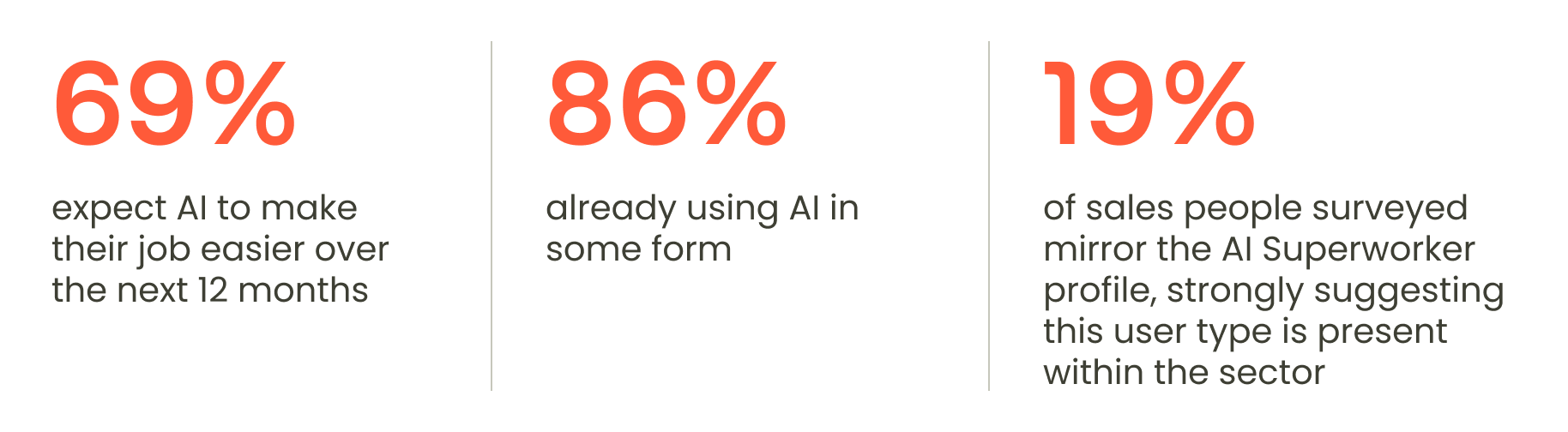
Sales professionals have adopted AI at broadly the same rate as other US office workers, with 86% now using AI in some form.
But adoption is not translating into meaningful impact. Sales people reported lower productivity overall, with only 19% of AI users reporting that AI has fundamentally changed the type of work they do, compared to 25% of US office workers in our main AI Productivity Trap Report. This task transformation is what defines the ‘AI Superworker’—employees who are leveraging the most from AI.
The picture that has emerged from our data is an industry that has embraced AI on the surface but has yet to unlock its deeper potential. Sales professionals report regularly using less AI than our main findings across all AI tool types, low adoption of sector specific tools and importantly, they are using less integrated AI.
This gap between adoption and impact is the defining challenge for sales; but one where a shift in implementation of tool type might hold the key.
Top findings
- Sales reps are currently only spending around 40% of their time on sales focused or communications tasks, with the other 60% being spent on admin centered tasks.
- AI impact is falling short with only 19% of sales AI users saying AI has changed the type of work they do, versus 25% in our main sample.
- Just 66% of sales AI users are using integrated tools compared to 73% in our main sample. This is where the biggest AI gains could be made.
Sample note:
- This briefing covers 436 respondents identified as working in sales. See methodology for more information.
- ‘Main sample findings’ relate to the 2000 US office workers surveyed in the AI Productivity Trap Report. Also referred to within this report as ‘US office workers’.
AI lags on impact
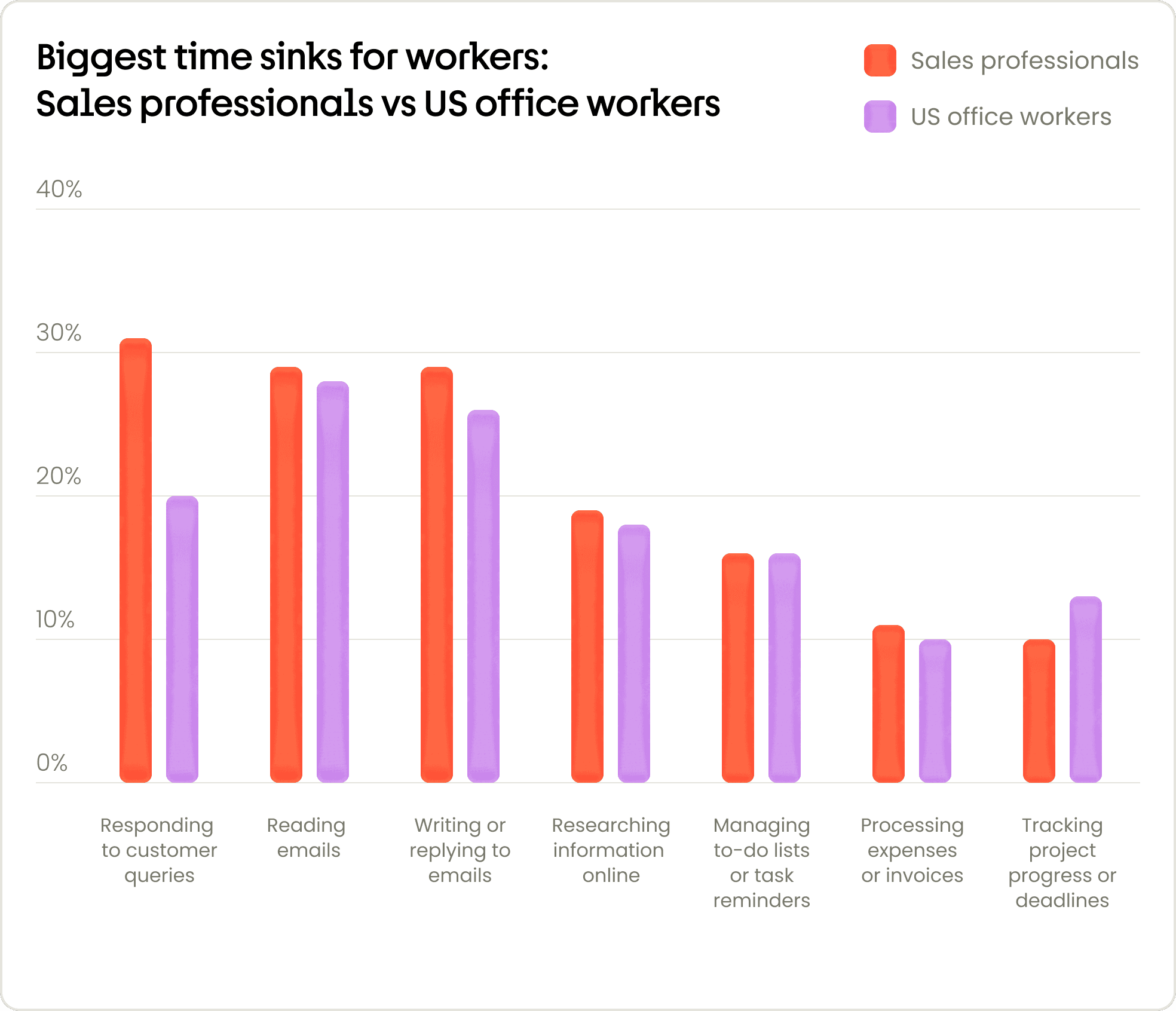
Sales reps only spend 40% of their time selling
From first glance at top sales time sinks, it seems communication dominates sales workflows; but collectively it only accounts for around 40% of where sales people are spending their time.
The other 60% is taken up with admin-heavy tasks such as data entry, research and managing to-do lists. Although each of these tasks are less time consuming individually, they all have a cumulative impact that distracts and takes time away from selling.
This is consistent with the Salesforce State of Sales Report 2026, which found that reps spend just 40% of their working week selling, with the other 60% consumed by admin focused tasks.
AI isn't delivering impact for sales reps
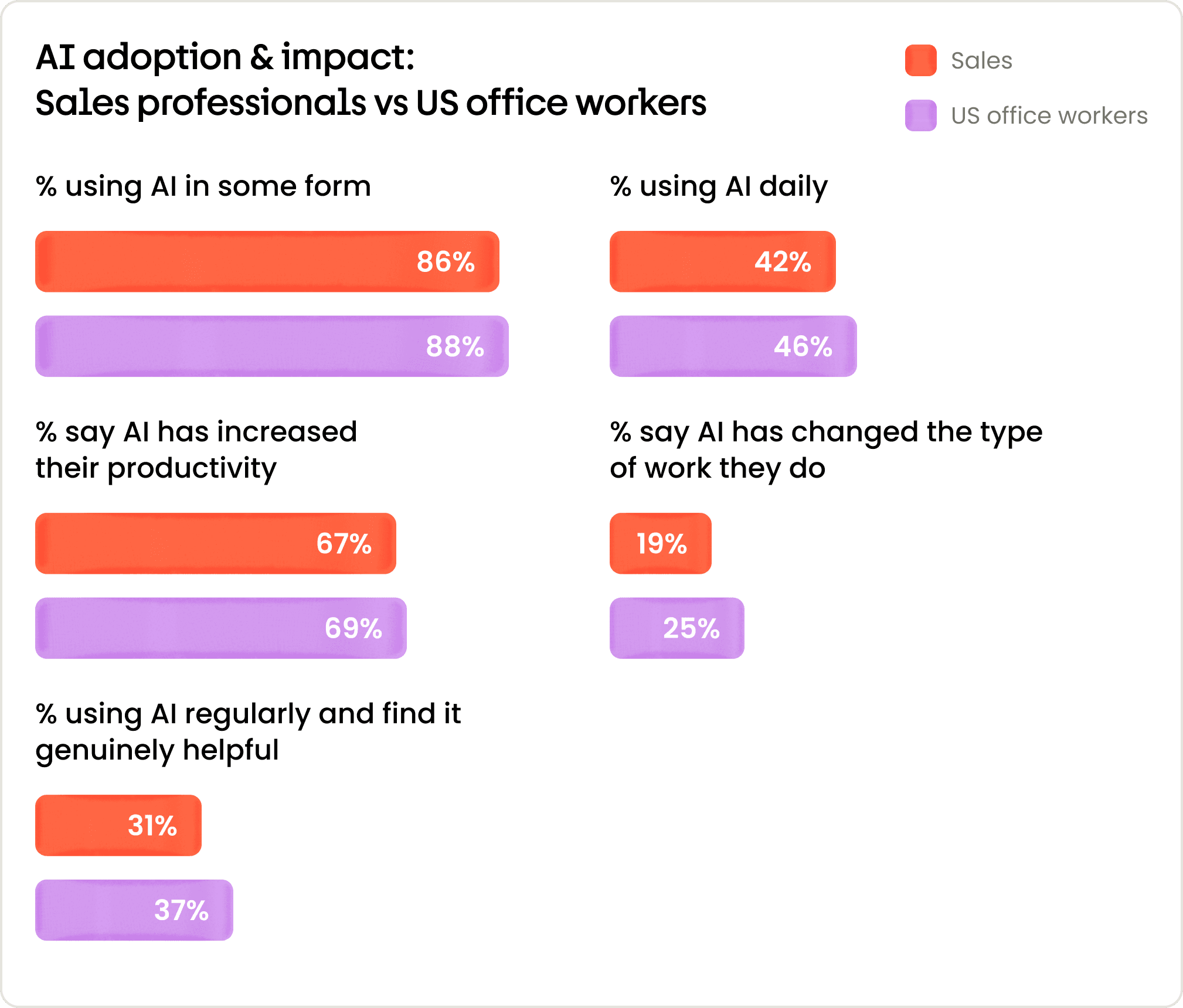
AI adoption within sales appears promising. 86% of sales professionals have used AI in some form, just 2 percentage points below our main sample findings of US office workers, at 88%. Daily AI use is reported to be 42% for sales reps, again slightly less than 47% overall.
But for sales, impact is falling short. Only 19% of sales AI users say AI has changed the type of work they do, versus 25% in our main sample; and only 31% say they find AI genuinely helpful versus 37% overall.
The pattern suggests that sales professionals are adopting AI at a broadly similar rate, but not experiencing the same benefits.
Sector-specific AI uptake is low
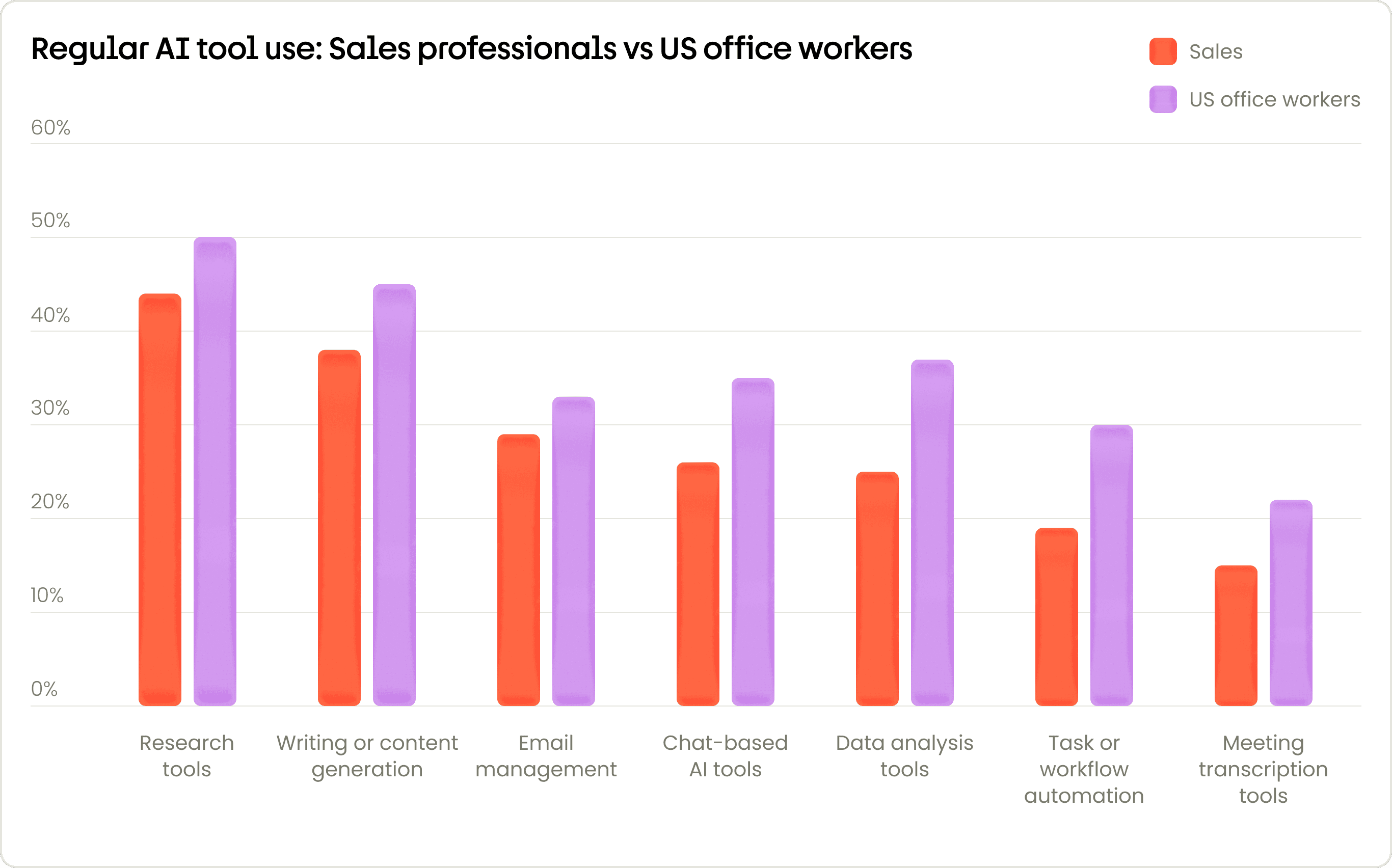
Across every general AI tool type, sales professionals are regularly using less AI than our main sample findings. The biggest gap is task and workflow automation at 11 percentage points behind US office workers overall.
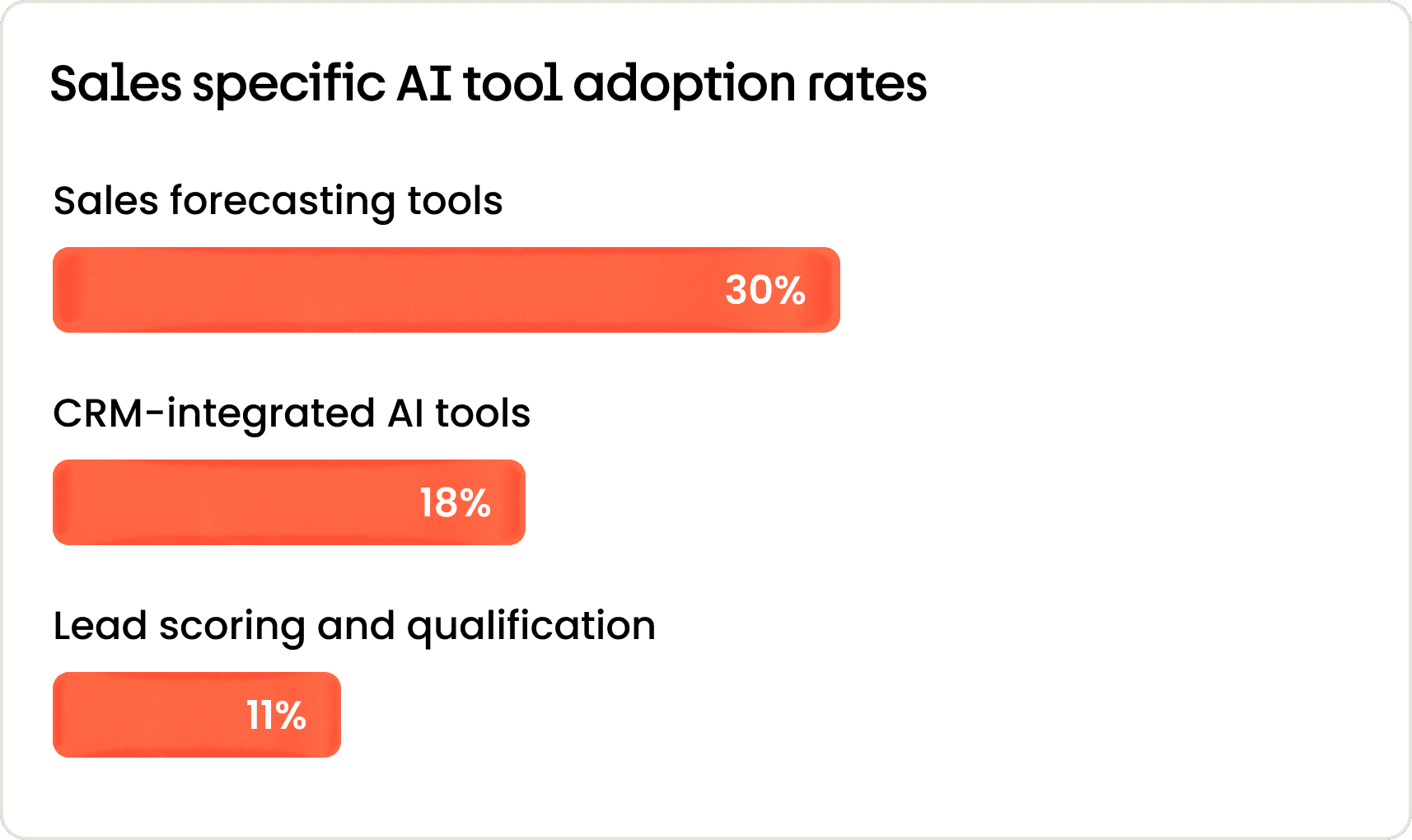
When it comes to sales-specific AI tools, adoption is also narrow and the potential for optimization using purpose-built AI tools remains largely untapped. Sales forecasting tools come up top, but only at 30%.
Given the highly industry specific nature of the sales workflow, this relatively low uptake is surprising. AI integrations, especially those which optimize the manual elements of CRM data-entry, could generate have potential time-savings.
Tool choice could be the differentiator
Integrated tools could unlock impact
Fyxer’s 2026 AI Productivity Trap Report found that workers using fully integrated AI tools are 63 percentage points more productive than those using standalone tools. Integrated tools appear to hold the key to true AI transformation.
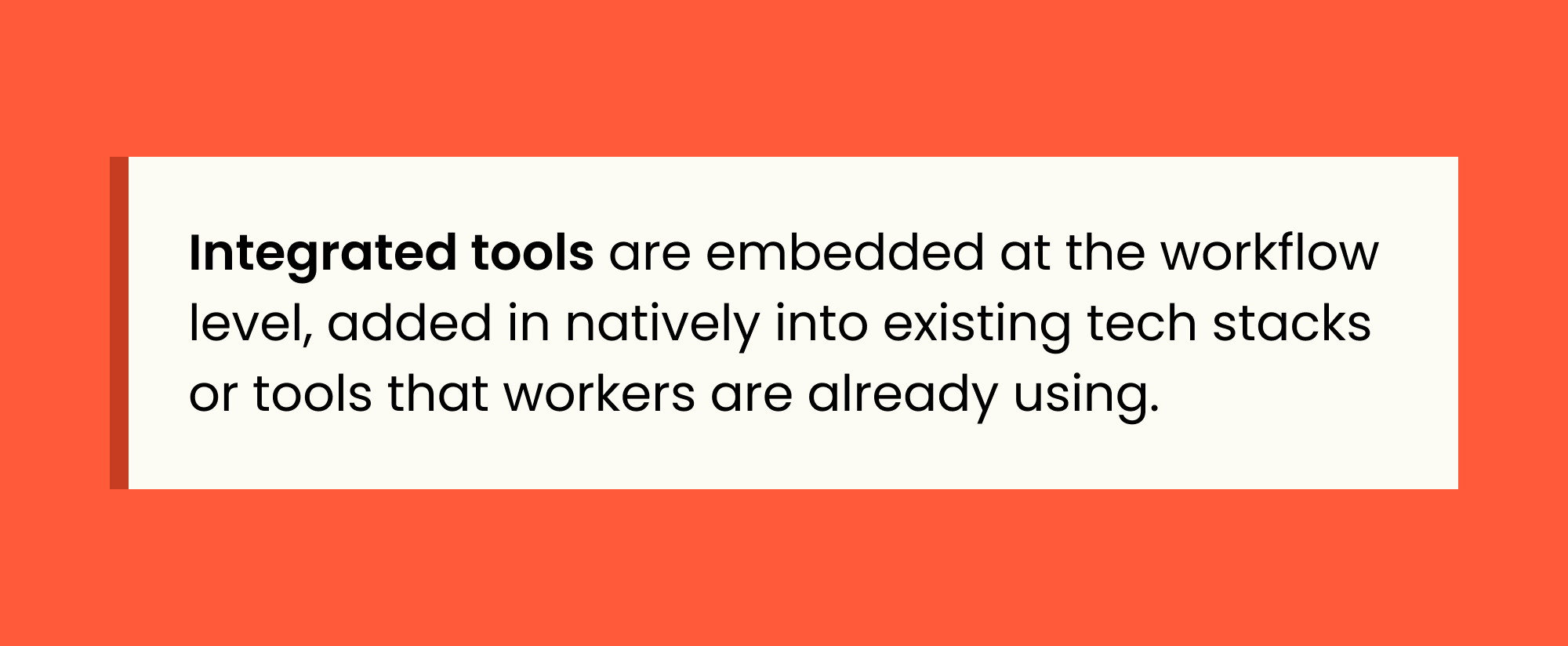
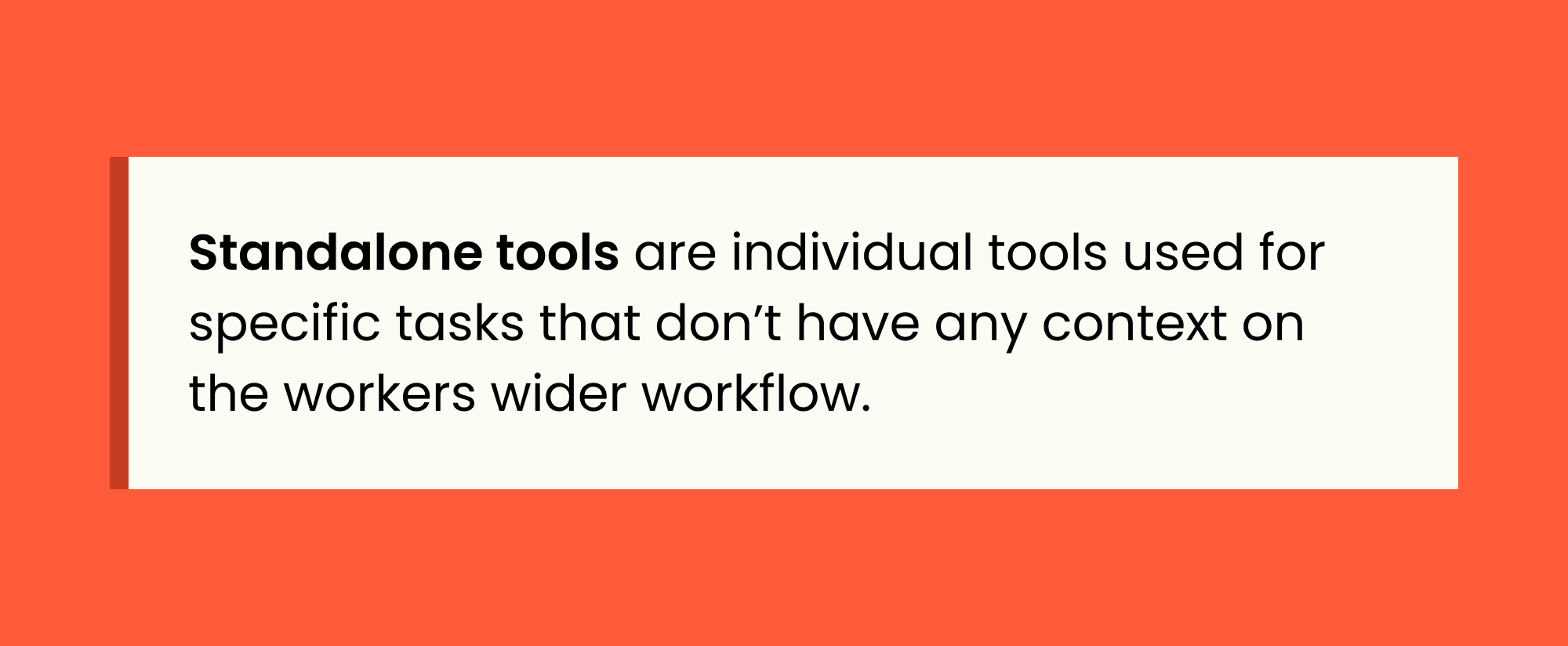
Sales lags behind the curve for integrated AI adoption; 66% of sales AI users are using integrated tools compared to 73% in our main sample. Sales people are also using standalone AI tools at a higher rate, 35% compared to 27%. Integrated tool use is the single most important differentiator for productivity gain and AI transformation. Although marginal, this lag within sales may be what’s stalling AI impact. Switching away from standalone tools is likely to be an important transition for teams looking to get ahead.
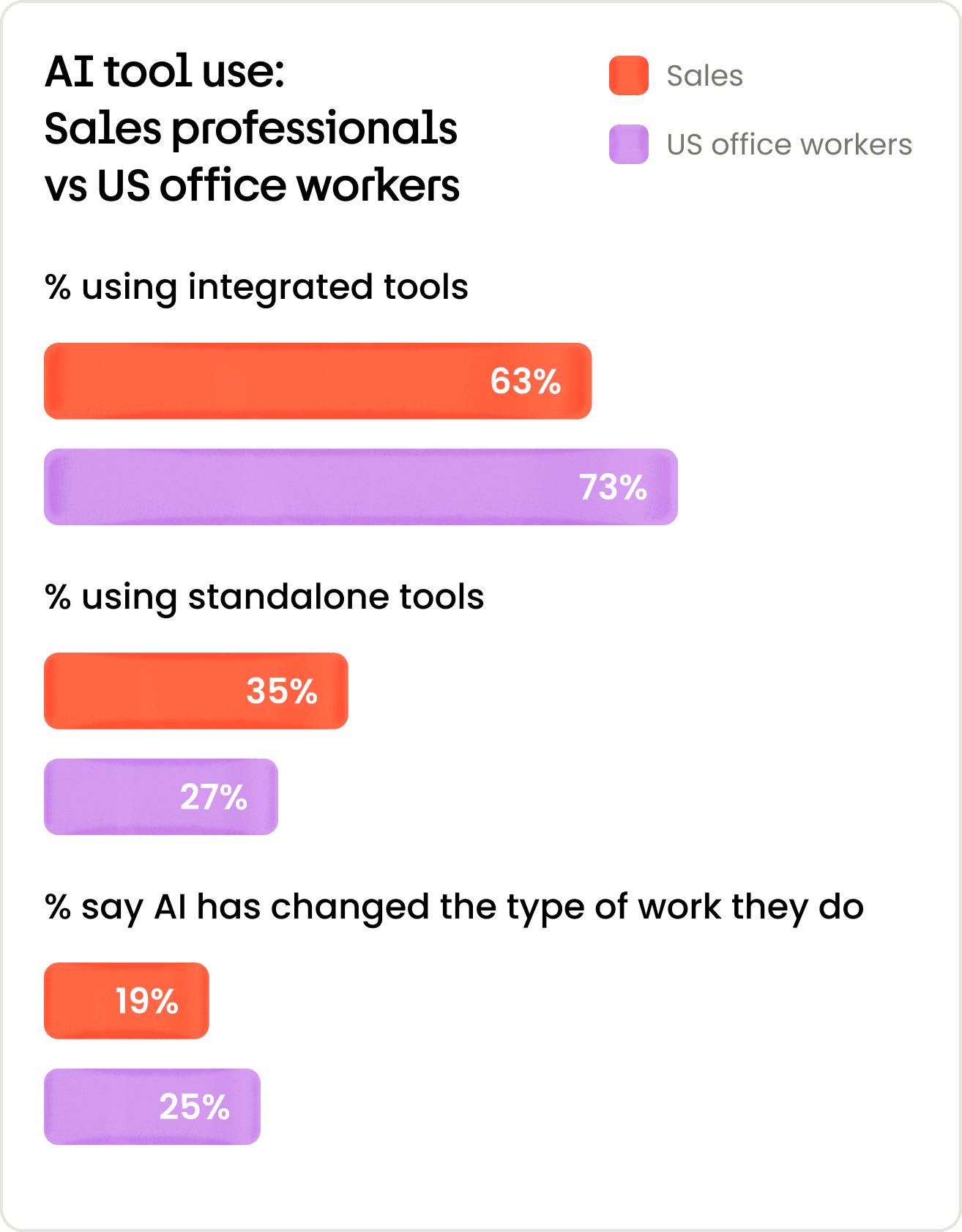
AI Superworkers: Sales falling behind on transformation
The ‘AI Superworkers’ make up 25% of all AI-users. Having fully adopted integrated tools, they’re the only AI users who’ve transformed the type of work they’re doing with AI. 87% of Superworkers say that AI has increased their productivity, compared to just 63% of non-Superworkers.
Sales has the lowest percentage of AI Superworkers out of any industry we surveyed, at just 19%. Sales is not realizing the same level of task transformation from AI, signalling a wider impact issue with meaningful gains still to be made.
Again, these lower transformation rates broadly track with lower integrated tool uptake; fewer workers adopting integrated AI tools, leads to fewer workers experiencing true AI transformation.
Who are AI superworkers?
Our AI Productivity Trap Report found that there were 3 key steps to the AI Superworker’s success:
- They use fully integrated tools at a high rate (62%)
- They self-select their own tools at a high rate (67%)
- They cover their entire workflow, with AI present at every stage for every task
Email is an untapped optimization opportunity
Reading and writing emails are the second and third biggest time sinks for sales professionals at 29% each. Responding to customer queries, which is also in part an email-driven task, tops the list at 31%.
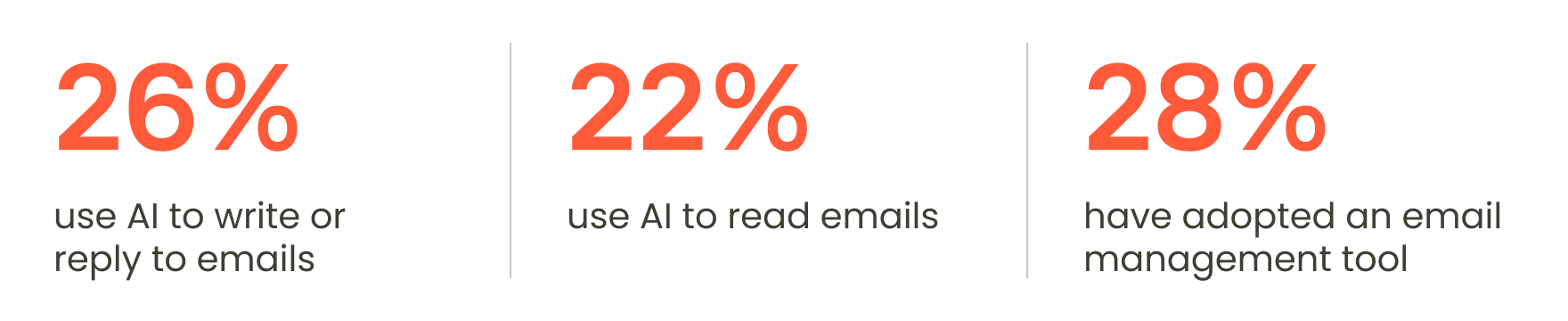
Yet AI adoption for email in sales is surprisingly low. Only 26% of sales AI users use AI to write or reply to emails, 22% to read emails and only 28% have adopted a dedicated email management tool.
For a function defined by customer communication, the underutilization of AI for email represents the clearest and most immediate productivity optimization opportunity available.
The Fix
Closing the sales productivity gap
The sales productivity story is not one of resistance to AI. 86% of sales professionals report having used AI in some form, only 2 percentage points lower than our main sample data. But AI is not delivering impact at the same level; sales professionals are experiencing far lower task transformation from AI tool use.
A picture is emerging of an industry frustrated with tools that aren’t delivering. Sales people lag behind on regular use of every single category of AI tool, and industry-specific tool adoption is also low. Sales professionals are also not adopting integrated tools at the same rate, with more relying on standalone tools separate to existing workflows.
The result is an industry that has adopted AI at pace but is capturing only a fraction of its potential value. Despite this, 69% of sales professionals still believe AI will make their jobs easier over the next 12 months, showing optimism, even in the face of low impact.
Capitalizing on the 19% who have experienced AI transformation, the rare but emerging sales AI Superworker, still holds promise for organizations looking to drive real change.
Three actions to drive change
Embed AI into existing workflows
The priority for sales leaders is not to introduce more standalone tools but to embed AI directly into the platforms their teams already rely on; email, CRM, and calendar. Integrated AI reduces the friction of context-switching.
Build from the AI Superworkers up
19% of sales AI users have already reached transformation. Organizations should identify these workers, understand which tools and workflows are driving their results, and build enablement programs around their experience.
Focus on reducing admin-heavy tasks
Sales professionals are only spending 40% of their time selling. Automation should be on speeding up processes that are admin-heavy so reps can focus on building and nurturing their pipeline.
Methodology
About this research
This report is built from primary data collected for Fyxer by OnePoll, an independent market research company. OnePoll surveyed 2,000 US office workers. This report covers 436 respondents identified as working in sales. Patterns are consistent with the broader cross-sector average dataset and should be quoted in that context.
Causation note Fyxer conducted an OLS regression with productivity increase (Q14a) as the dependent variable. Independent variables included integration level (Q11), number of tools (Q10), self-selection (Q16), seniority, generation, and gender. Integration level remained a significant independent predictor of productivity outcomes (p<0.01) after controlling for all other variables. A separate regression confirmed integration independently predicts stress outcomes in both directions (p<0.01), with seniority not significant in either model.
About Fyxer
Fyxer is the email assistant that organizes your inbox, writes draft replies and takes actionable meeting notes, embedded directly into Gmail and Outlook. Fyxer processed 1.4 billion emails in 2025 and saves users an average of one hour a day on avoidable inbox admin. This report is part of the Fyxer AI Productivity Gap Report series.
Press enquiries: press@fyxer.com